
Last updated October 16, 2026
 Wood & steel frame
 Farm & ranch
 LiftMaster operators
Free on-site gate assessment - hinges, posts, and your LiftMaster or Nice gate operator checked before anything is quoted
The assessment is free and the quote is the invoice.
Get your free estimateSeasonal Gate Repair Care for Orange County: Year-Round Homeowner’s Guide
Most seasonal gate maintenance checklists were written for places with hard freezes, snow load, and spring thaw. Follow one of those in Orange County and you’ll be oiling hinges in January while your gate’s real problem, a rusting bottom rail sitting in saturated soil after the first heavy rain, goes unnoticed for another year. This guide is different. For The Complete Guide to Gate Repair in Orange County, it maps gate care to the four actual stress periods Orange County gates live through every year: late-summer UV and heat spikes, fall Santa Ana wind events, winter rain and ground saturation, and spring marine-layer humidity along the coast. You’ll learn what to check each season, what you can safely inspect yourself, what needs a trained technician, and what it costs to fix the problems our crews see most often from San Clemente up through Anaheim and across to Yorba Linda.
Styles & brands we work with
Quick Answer
Seasonal gate care in Orange County means matching the maintenance task to the actual weather stress: inspect wheels, tracks, and leaf buildup after Santa Ana wind events in fall; check post footings and bottom seals after winter rain saturation; address UV damage to wood and powder-coat finishes in late summer; and watch for salt-air hinge corrosion in spring along coastal communities like Newport Beach and Laguna Beach. Most homeowners can handle cleaning and visual checks, but anything involving gate operators, torsion springs, or misaligned slide-gate tracks should be left to a professional for Gate Repair, because those components are under dangerous tension.
Table of Contents
- The Orange County Gate Stress Calendar: Four Seasons, Not the Ones You Learned in School
- Late-Summer Heat and UV: What It Does to Wood, Powder Coat, and Operator Electronics
- Santa Ana Season: Wind-Load Stress, Debris in Tracks, and Sensor Misalignment
- Winter Rain and Ground Saturation: Track Alignment, Post Footings, and Bottom Seals
- Spring Marine-Layer Humidity: Salt Air, Hinge Corrosion, and Coastal Gate Hardware
- The One-Page Seasonal Quick-Reference Card
- What Seasonal Gate Repairs Actually Cost in Orange County
- Common Mistakes to Avoid
- When to Call a Professional
- Frequently Asked Questions
- The Bottom Line
The Orange County Gate Stress Calendar: Four Seasons, Not the Ones You Learned in School
A gate in Orange County doesn’t care what the calendar says. It cares about ultraviolet radiation, wind gusts, soil moisture, and salt content in the air. Those four forces arrive on a schedule that doesn’t line up with spring, summer, fall, and winter. Here’s what actually happens, and when.
Late-summer heat and UV (August through October): Inland communities like Irvine, Tustin, and Rancho Santa Margarita regularly see daytime highs above 90°F in August and September. A dark powder-coated steel gate sitting in direct afternoon sun can reach surface temperatures of 150°F to 170°F. That kind of heat does two things. First, it accelerates UV degradation of any finish, whether that’s automotive-grade powder coat on steel or a stain-and-seal coat on wood. Second, it cooks the internal electronics of gate operators mounted on metal posts. Capacitors in control boards degrade faster in sustained heat. We’ve replaced more control boards in September and October than in any other stretch of the year.
Santa Ana wind season (September through December, peaking in October and November): Santa Ana winds in Orange County routinely gust to 40 or 50 mph, with canyon areas like Silverado and Trabuco Canyon regularly seeing higher. These winds carry fine dust, leaves, palm fronds, and occasionally heavier debris. For gates, the Santa Anas create three problems: debris lodges in slide-gate tracks, wind load stresses hinges and post anchors on swing gates, and photo-eye safety sensors get knocked out of alignment by flying branches or accumulated dust. A gate that operates perfectly all summer can fail the second week of October because a palm frond wedged itself under the track wheel.
Winter rain and ground saturation (December through March): Orange County doesn’t get much rain, but when it arrives, it arrives concentrated. A single atmospheric river event can drop two to four inches of rain in 24 hours. Clay-heavy soils in many parts of the county, particularly in the inland valleys and foothills, absorb that water and expand. The result is shifting ground around concrete post footings and slide-gate track beds. After a wet winter, we see a spike in calls for gates that drag on the ground, slide tracks that have settled out of level, and swing-gate posts that have tilted a degree or two. The gates don’t fail during the storm. They fail three weeks later, after the soil has had time to move.
Spring marine-layer humidity (April through July): Coastal Orange County from Seal Beach down through Dana Point sits under the marine layer for much of the spring and early summer. That means persistent relative humidity above 70%, salt in the air, and surfaces that stay damp for hours after sunrise. For gate hardware, the marine layer accelerates corrosion on unprotected steel hinges, fasteners, and operator arms. Powder coat helps, but any scratch or chip in the finish becomes an entry point for salt-laden moisture. In coastal neighborhoods, we recommend inspecting hinges and mounting bolts every spring, because a corroded hinge pin is a ten-dollar fix early and a bent-gate repair later.
That’s the calendar. The rest of this guide goes through each stress period in detail, with the specific checks and tasks that belong to each one. For a general primer on gate systems before you dive into seasonal care, start with our Gate Repair in Orange County page.
Late-Summer Heat and UV: What It Does to Wood, Powder Coat, and Operator Electronics
Here’s a number worth knowing: unshaded south-facing and west-facing surfaces in Orange County receive roughly 2,800 to 3,200 hours of direct sun per year, depending on how far inland the property sits. A gate facing west in Lake Forest gets hit harder than a gate facing east in Costa Mesa. Over time, that UV exposure breaks down the chemical bonds in virtually every finish material used on residential gates.
Wood Gates: UV Attacks the Lignin Before You See the Damage
Wood gates, especially those with a clear or semi-transparent sealer, fail from the sun before they fail from anything else. UV radiation breaks down lignin, the natural polymer that holds wood fibers together. The visible sign is a gray, chalky surface that looks dry. By the time you see it, the wood’s protective seal has already failed and moisture is getting in. That’s how a wood gate in Orange County goes from looking fine in May to showing hairline cracks and raised grain by September.
What you can do in late summer:
- Inspect the top rail and the bottom rail first. These two surfaces take the most direct sun and are the first to show finish failure. Run your hand along the top rail. If it feels rough or the grain feels raised compared to the rest of the gate, the seal is breaking down.
- Check the joints. Heat and UV cause wood to expand and contract. That movement stresses the joinery. Look for gaps opening at corner joints and where diagonal braces meet horizontal rails.
- Look for color difference between sides. If the street side of the gate is noticeably lighter or grayer than the yard side, UV has been working on it. That’s a sign to reseal before the next rainy season puts moisture into the unprotected wood.
Sealing a wood gate in Orange County generally runs $150 to $350 for a typical single swing gate, including cleaning, sanding, and one coat of a UV-rated exterior sealer. It’s a weekend’s work for a homeowner who’s comfortable with a brush, but hiring it out usually gets a cleaner result on the edges and undersides.
Powder-Coated Steel and Wrought Iron: Finish Failure Is a Coastal vs. Inland Story
Powder coat is the standard finish on modern steel and iron gates. When it’s applied correctly, it’s tough. But it’s not invincible, and in Orange County, it fails on two different timelines depending on where you live.
Inland (Tustin, Orange, Anaheim Hills, Yorba Linda): The dominant threat is UV plus heat. Powder coat chalks and fades gradually in direct sun. A black gate that’s been up for five years inland will often show a dull gray film that rubs off on your hand. The coating hasn’t failed structurally yet, but it’s on its way. The usual fix is a scuff-and-rec coat, which runs $300 to $600 for a typical driveway swing gate.
Coastal (Newport Beach, Corona del Mar, Laguna, Huntington Beach): The dominant threat is salt-chloride attack at any break in the coating. A tiny chip from a rock or a bicycle handlebar becomes a rust bloom within weeks because the marine layer keeps the exposed steel damp and salty. Coastal homeowners should be checking their gates for chips and treating them with a rust-inhibiting touch-up paint before they become a problem. A rusted bottom rail on a coastal gate typically means the gate’s structural steel has started to thin, and in many cases, the gate needs a full strip-and-rec coat or replacement of the affected section.
Operator Electronics: Heat Kills Control Boards
The control board inside your gate operator is a printed circuit board with capacitors, relays, and a transformer. Every component on that board has a rated operating temperature range. When the board sits inside a metal housing bolted to a metal post in direct afternoon sun, the internal temperature of that housing can exceed the rating by a wide margin on a hot September day.
What a homeowner should do in late summer:
- Open the operator cover (power off first) and check for visible swelling or discoloration on the control board. A bulging capacitor is a failing capacitor.
- Feel the operator housing during the hottest part of the day. If it’s too hot to hold your hand on for more than a few seconds, the electronics inside are running hotter than they should be.
- Listen for a change in the operator’s sound. A sluggish start or a labored hum on hot days can signal a capacitor that’s about to let go.
Replacing a failed control board on a common residential operator typically runs $250 to $500 parts and labor, depending on the brand. We service BFT, Linear, Viking, and Ghost Controls operators among others, and we’ve found that the failure pattern is consistent: boards fail most often in September and October, after three to four months of accumulated heat stress.
We cover operator and electrical issues in more depth on our Electric Gate Repair in Orange County page.
Santa Ana Season: Wind-Load Stress, Debris in Tracks, and Sensor Misalignment
If you only do one seasonal maintenance task all year, do it after the first strong Santa Ana event of the fall. That wind event will find any weakness in your gate system, and it will do it all at once rather than gradually.
What the Wind Actually Does to a Gate
A closed swing gate is a flat surface perpendicular to the wind. When a Santa Ana gust pushes against it, the gate becomes a lever. The hinge posts take the load, and the hinges themselves act as fulcrums. The longer the gate leaf, the more mechanical advantage the wind has. A 6-foot gate leaf in a 50 mph gust experiences a substantial bending moment at the hinge side, enough over time to pull post anchors loose in the concrete or bend hinge brackets.
Slide gates face a different problem. They’re usually made with open pickets or bars, so they catch less wind than a solid swing gate. But they ride on a track that sits at ground level, and the Santa Anas drop leaves, palm fronds, and small branches exactly where the track runs. A single eucalyptus branch lodged between the track wheel and the rail can stop a slide gate cold.
Post-Santa-Ana Checklist for Homeowners
- Clear the track first. For slide gates, remove everything from the track by hand (gloves on, because palm frond thorns go through skin). Check the full path the wheel travels, not just the section visible when the gate is open.
- Test the gate’s full travel. Run the gate open and closed three times. Listen for a change in sound: grinding, scraping, or a rhythmic bump usually means something is in the track or a wheel bearing is failing.
- Check the safety sensors. Most residential gate operators have photo-eye sensors near the base of the gate. Wind-blown debris can knock them a few degrees out of alignment, and even a small misalignment will stop the gate from closing automatically. Look for blinking indicator lights on the sensor bodies, which usually signal a misalignment or obstruction.
- Inspect the hinges and posts. Stand at the hinge side of a swing gate and push the gate gently against its closed position. If you see movement between the hinge plate and the post, or between the post and the ground, the wind has started to work on the anchors. Schedule a tightening or replacement before the next high-wind event.
- Check the drop rod or latch. Many Orange County gates use a manual drop rod or mechanical latch at the free end. High winds can bend these components, which then don’t seat correctly in their receivers. A bent drop rod is usually a quick parts-and-labor fix, but ignored, it means the gate rattles in the wind and puts additional stress on the hinges.
If the sensor alignment issue turns out to be more than a quick nudge back into place, or if the operator refuses to respond after a wind event, that’s typically either a wiring connection loosened by vibration or a control board that took a surge. Both are jobs for a technician. We’ve had customers in Anaheim Hills and other hillside areas where a single Santa Ana event loosened wiring connectors inside the operator housing, and the gate worked intermittently for weeks before failing outright.
Winter Rain and Ground Saturation: Track Alignment, Post Footings, and Bottom Seals
Orange County rain doesn’t soak the ground gradually like a Pacific Northwest drizzle. It arrives as a few concentrated downpours, and the soil, especially the expansive clay common in foothill and inland areas, responds by swelling. Then it shrinks when it dries. That swell-shrink cycle is what causes gate problems weeks after the storm has passed.
What to Check After the First Hard Rain of the Season
- Slide gate track level. Run the gate and watch the gap between the track wheels and the rail. If the gap changes as the gate travels, the track has settled unevenly. A track that’s out of level by even a half inch over ten feet will cause the gate to bind and the operator motor to work against itself. The motor then overheats, and the control board eventually fails.
- Swing gate post plumb. A post that’s started to lean will show it subtly at first. Put a level on the post, or simply stand back and sight down the line of the gate. If the gate leaf no longer hangs square in the opening, the post footing has moved. Check again after two weeks of dry weather, because clay soil moves again as it dries.
- Bottom seal condition. The bottom seal (or weather strip) on a gate does two jobs: it keeps water from pooling under the gate and it reduces the gap that lets insects and debris through. After rain, a saturated bottom seal holds water against the bottom rail. On steel gates, that’s where rust starts. On wood gates, that’s where rot starts. Replace a cracked or misshapen bottom seal before the next rain event.
- Standing water near post footings. If you have standing water that doesn’t drain away within a few hours after rain, that water is getting under the footing. In clay soil, that means movement. Improving drainage around the post is usually a simple fix: regrade the soil so water flows away, or add a gravel-filled drainage channel if the post sits in a low spot.
Ground Saturation and Gate Operators
Gate operators are usually mounted on the gate post or on a pad near the gate. If the ground shifts under that pad, the operator moves relative to the gate, and the drive arm or chain goes slightly out of alignment. The result is the same as a track out of level: the motor works harder, the components wear faster, and eventually something fails.
After a wet winter, we get calls from homeowners all over Orange County reporting that their gate “won’t open all the way” or “reverses before it closes.” Those are classic symptoms of ground movement affecting operator alignment. In some cases the fix is a simple adjustment. In others, the post or pad needs to be reset in new concrete. That’s a bigger job, and it’s one of the reasons we recommend calling before a small alignment problem becomes a structural one.
If the gate itself has reached the end of its service life and you’re considering replacement, our Gate Installation in Orange County guide explains what a new system costs and what’s involved.
Spring Marine-Layer Humidity: Salt Air, Hinge Corrosion, and Coastal Gate Hardware
If your house is within about three miles of the Pacific in Orange County, your gate lives in a different environment than a gate in Mission Viejo or Fullerton. The marine layer parks itself over the coast in the spring and early summer, dropping humidity that wets every surface and depositing salt on exposed metal. That combination is what kills gate hardware fastest.
Coastal Corrosion Hotspots
- Hinge pins and bushings. The most common coastal failure we see is a seized hinge. The pin rusts inside the bushing, the gate stops swinging smoothly, and the operator motor strains against the added friction. A seized hinge on a manual gate eventually bends the hinge plates or tears the screws out of the post.
- Bare steel fasteners. Screws, bolts, and bracket hardware that aren’t stainless or zinc-coated rust quickly in salt air. Once a fastener rusts, it seizes in place, which makes any future repair more expensive because the old hardware has to be drilled out.
- Operator arms and piston rods. On hydraulic operators and some electromechanical swing operators, the exposed piston rod is bare steel in many models. Salt air pits the surface, which then tears up the rod seal as the piston cycles. That causes hydraulic fluid leaks on some models and seal failure on others.
- Chain and sprocket drives on slide gates. The chain picks up salt-laden moisture and spreads it across the sprockets every cycle. Unlubricated coastal chains rust fast.
Spring Coastal Maintenance Routine
- Lubricate hinge pins and rollers. Use a marine-grade or synthetic lithium grease, not WD-40 (which is a solvent and will strip the grease that’s already there). Do this in spring and again in the fall for coastal homes.
- Inspect all visible fasteners. Look for rust bloom around screw heads and bolt heads. If you see it, the hardware should be replaced with stainless equivalents before the rust spreads into the surrounding steel.
- Check the operator piston rod or drive arm. If you see pitting or rust on any exposed rod surface, call for service. Continuing to run the operator with a pitted rod will ruin the seal, and replacing the seal plus the rod costs more than addressing the pitting early.
- Wash the gate. Once or twice a year, hose the gate down and scrub it with a mild car-wash soap, then rinse clean. This removes the salt film that accumulates during marine-layer season. It’s also a good chance to look for new chips in the finish.
For inland homeowners, the marine-layer routine is less urgent. Interior Orange County gets much less salt, and humidity drops quickly after the morning clouds burn off. Inland gates should still get an annual lubrication, but corrosion from salt air is a coastal problem first.
The One-Page Seasonal Quick-Reference Card
Here’s the whole guide distilled to a single screenshot-worthy card. Save it on your phone and work through the relevant column when each season’s first weather event arrives, and find more guides & resources on our blog.
- After a late-summer heat spike (Aug-Oct): Check wood gate finish for rough grain. Check powder coat for chalking. Open the operator housing and look for swollen capacitors. If the operator sounds sluggish in the heat, schedule a board check.
- After the first strong Santa Ana (Oct-Nov): Clear slide tracks of all debris. Run the gate three times and listen for new noise. Check photo-eye sensor alignment (blinking light = misaligned). Push on the hinge side of swing gates and look for post movement. Check drop rods and latches for bending.
- After the first heavy rain (Dec-Mar): Watch the gap between track wheels and rail as the gate runs. Sight down the gate and check posts for plumb. Inspect bottom seals for cracks and water absorption. Look for standing water near post footings and regrade if needed.
- During marine-layer season (Apr-Jul, coastal homes): Lubricate hinge pins and rollers with lithium grease. Inspect fasteners for rust bloom and replace with stainless. Check operator piston rods for pitting. Wash the gate with mild soap and water to remove salt film.
What Seasonal Gate Repairs Actually Cost in Orange County
Most homeowners in Orange County want at least a rough number before they pick up the phone. Here’s what our crews typically see, in current local market pricing. These are ranges for typical single-family driveway gates; large estate gates, custom ornamental work, and commercial systems run higher.
- Track wheel or roller replacement (slide gate): $120 to $280 parts and labor, depending on the wheel type and whether the gate needs to be lifted to swap it.
- Post-Santa-Ana sensor realignment: $85 to $180. Many jobs are simple realignments; the higher end includes replacing a damaged sensor.
- Wood gate resealing (single gate, one side): $150 to $350 including cleaning and one coat. Two coats or both sides push closer to $500.
- Powder-coat touch-up or spot repair: $100 to $250 per damaged section. A full gate recoat usually runs $600 to $1,200 depending on gate size and prep work.
- Control board replacement: $250 to $500 for most residential LiftMaster, BFT, Linear, Viking, or Ghost Controls operators, parts and labor included.
- Hinge replacement (pair on a swing gate): $180 to $420 for standard residential hinges, installed, with proper shimming and alignment.
- Slide gate track leveling: $200 to $450 for shimming and re-anchoring an out-of-level track. Full track replacement in concrete runs $500 to $900.
- Post reset in new concrete: $450 to $900 per post, including demolition of the old footing where needed and new concrete with proper cure time.
- Complete diagnostic visit with adjustments and minor tweaks: $89 to $150 for the call, waived if you proceed with the repair.
Every Portcullis Gate Repair Orange County job gets a written price before any work starts. That means exactly what it sounds like: the number is written down, agreed to, and honored. No finding more damage and doubling the invoice after the gate’s already apart. Dean Prescott has operated this business on that principle since 2008, and the Kingswell Guarantee stands behind it in writing on every repair invoice.
Common Mistakes to Avoid
- Following a national seasonal checklist. Those guides tell you to “winterize” your gate. In Orange County, the gate needs rain-saturation checks after big storms and UV checks in late summer, not antifreeze and snow-load prep. Using the wrong calendar means doing work that doesn’t matter while skipping the work that does.
- Ignoring a blinking sensor light. A photo-eye sensor that’s misaligned won’t just stop the gate from closing automatically. It can also cause intermittent behavior: closing sometimes, refusing other times, reversing for no obvious reason. Most sensor problems are cheap to fix when caught early.
- Lubricating the gate track. Slide gate tracks should be clean and dry, not greased. Grease on a track picks up dirt and debris, which then grinds into the wheels and rail. Lubricate the hinge points, rollers, and chain if present, not the track surface itself.
- Resetting a tripped breaker repeatedly without investigating. If the gate operator’s breaker or GFCI trips more than once, something is drawing more current than it should. That’s how control-board failures announce themselves before they die completely. Repeated resets often burn out adjacent components.
- Painting over rust. If you find a rust spot on a steel gate, painting directly over it traps the rust underneath and it keeps spreading invisibly until the steel is structurally compromised. The rust needs to be removed first, then the area primed and painted. Coastal Orange County homeowners deal with this constantly.
- Using the gate while the track is obstructed. If a branch or debris is in the track and you keep running the gate, the wheel will eventually ride over or through the obstruction, bending the track or damaging the wheel bearing. Clear the track completely before running the gate.
- Delaying a post inspection after noticing tilt. A slightly leaning post gets worse with every wind event and every rain cycle. The repair is usually straightforward when the tilt is first noticeable. Waiting a season can mean the difference between shimming a post and digging out and replacing the entire footing.
When to Call a Professional
Some tasks in this guide are homeowner-appropriate: cleaning tracks, checking for standing water, noting finish wear, calling when something looks off. But several gate issues in Orange County should not be DIY projects, as covered in our DIY vs Professional Gate Repair: The Orange County Homeowner’s Decision Guide. Gate operators contain high-voltage wiring and capacitors that can hold a charge even after power is cut. Swing gate hinges and torsion systems are under mechanical tension that can release suddenly. And a slide gate that’s come off its track is heavy enough to cause serious injury if it tips.
Call a professional when you see any of these: a post that’s visibly leaning, an operator that trips its breaker more than once, a slide gate that’s off its track or grinding against the rail, a swing gate that sags or won’t close square, or any electrical issue inside the operator housing. Portcullis Gate Repair Orange County offers free estimates in Orange County, and a live person answers the phone 24 hours a day, 7 days a week. Call (820) 529-0801 and you’ll get the price in writing before any work begins.
Frequently Asked Questions
For most Orange County homes, a professional inspection once a year is enough, timed to catch issues before the season that stresses your particular gate system most. Inland homes dealing with heat and Santa Anas benefit from a late-summer or early-fall service visit. Coastal homes dealing with salt air benefit from a spring service. Gates that are used more than 20 cycles per day, common on busy family driveways, should be looked at twice a year.
Clear all debris from the slide gate track by hand before running the gate, then run it through three full open-close cycles while listening for grinding or new noises. Check the photo-eye sensors for misalignment (look for blinking indicator lights), and inspect swing gate posts by pushing gently on the hinge side to feel for movement. If anything looks or sounds wrong beyond the basics, call a professional before running the gate further. Call (820) 529-0801 for an exact quote, estimates are free.
Most gate repairs in Orange County run between $120 and $500 for common issues like track wheel replacement, sensor realignment, control board replacement, or hinge swaps. Structural jobs like post resets or track replacement run $450 to $900. Every Portcullis Gate Repair Orange County job gets a written price before work starts, so you’ll know the exact number before a bolt is turned.
Yes, and it’s specific to the four forces covered in this guide: intense UV combined with heat in late summer, Santa Ana wind load and debris in fall, concentrated rain and soil expansion in winter, and persistent salt-air humidity in spring for coastal homes. A gate in Laguna Beach corrodes faster than one in Yorba Linda, but the Yorba Linda gate takes more UV and heat. Understanding which forces affect your property is the whole point of our seasonal approach.
Sometimes, but it depends on what moved. If the sensor bracket simply got knocked a few degrees by debris, gently repositioning it until the indicator light goes steady often solves the problem. If the sensor was physically damaged, or if the wiring connections loosened inside the housing, that’s electrical work and a professional should handle it. Misaligned sensors are one of the most common post-Santa-Ana service calls we get across Orange County.
The Kingswell Guarantee, on every Portcullis Gate Repair Orange County job, is a written, 365-day promise on the repair work. If the repair fails within that period, we come back and fix it at no charge under the 365-Day Done Right Promise. The guarantee is stamped on the repair invoice, so you always have it in writing. It covers the repair itself, not wear and tear on components we didn’t touch.
The Bottom Line
Orange County gates don’t fail on a national seasonal calendar. They fail when UV bakes the finish in September, when a Santa Ana gust lodges a palm frond in the track in October, when January rain swells the clay under a post footing, or when the marine layer rusts a hinge in June. Match the maintenance to the actual stress period, and most expensive gate repairs become small ones or never happen at all. Keep the quick-reference card from this guide on your phone, do the checks that belong to each season, and when something’s beyond a visual inspection, call before it gets worse. Portcullis Gate Repair Orange County has been serving Orange County since 2008, with a written price before any work starts, a real arrival window, and a 365-Day Done Right Promise in writing on every job. Call (820) 529-0801 for a free estimate.
Written by Dean Prescott, Owner at Portcullis Gate Repair Orange County, serving Orange County since 2008.
See the difference
 Before
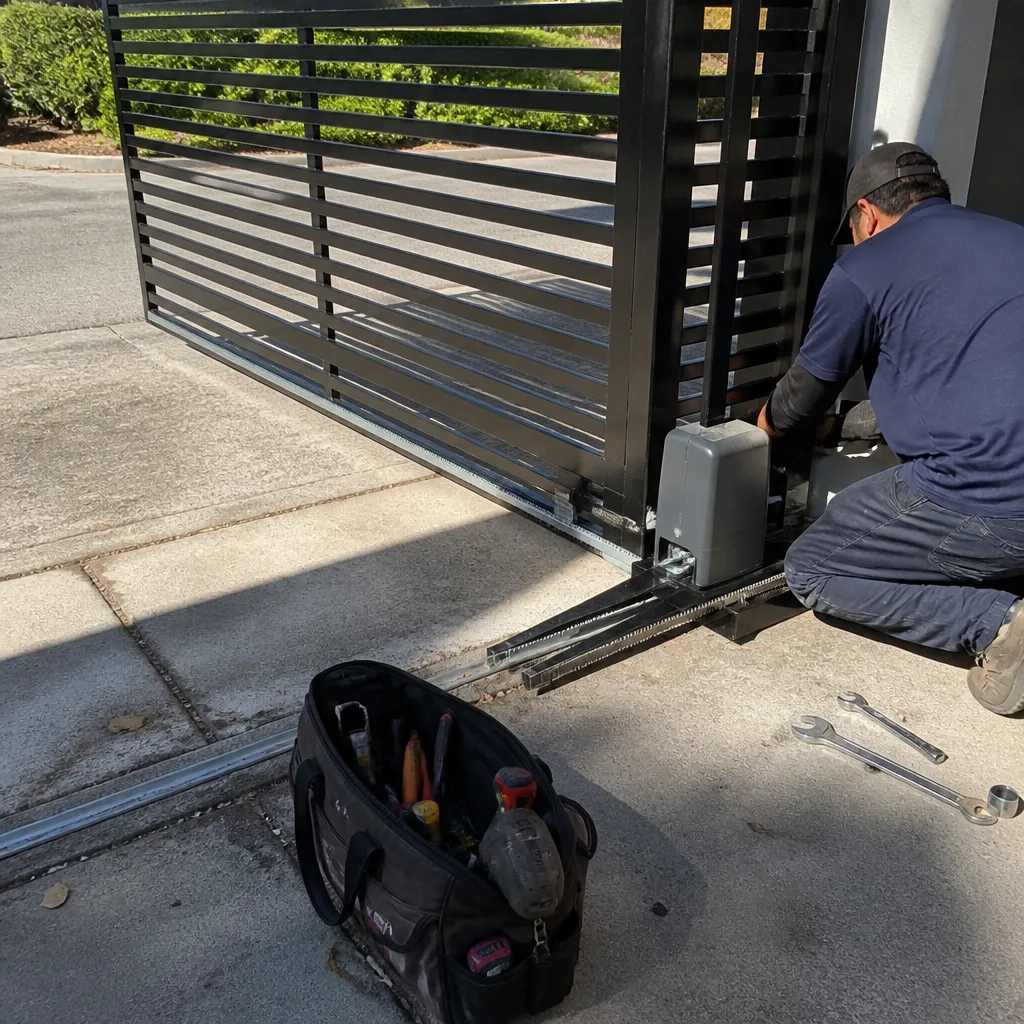 After
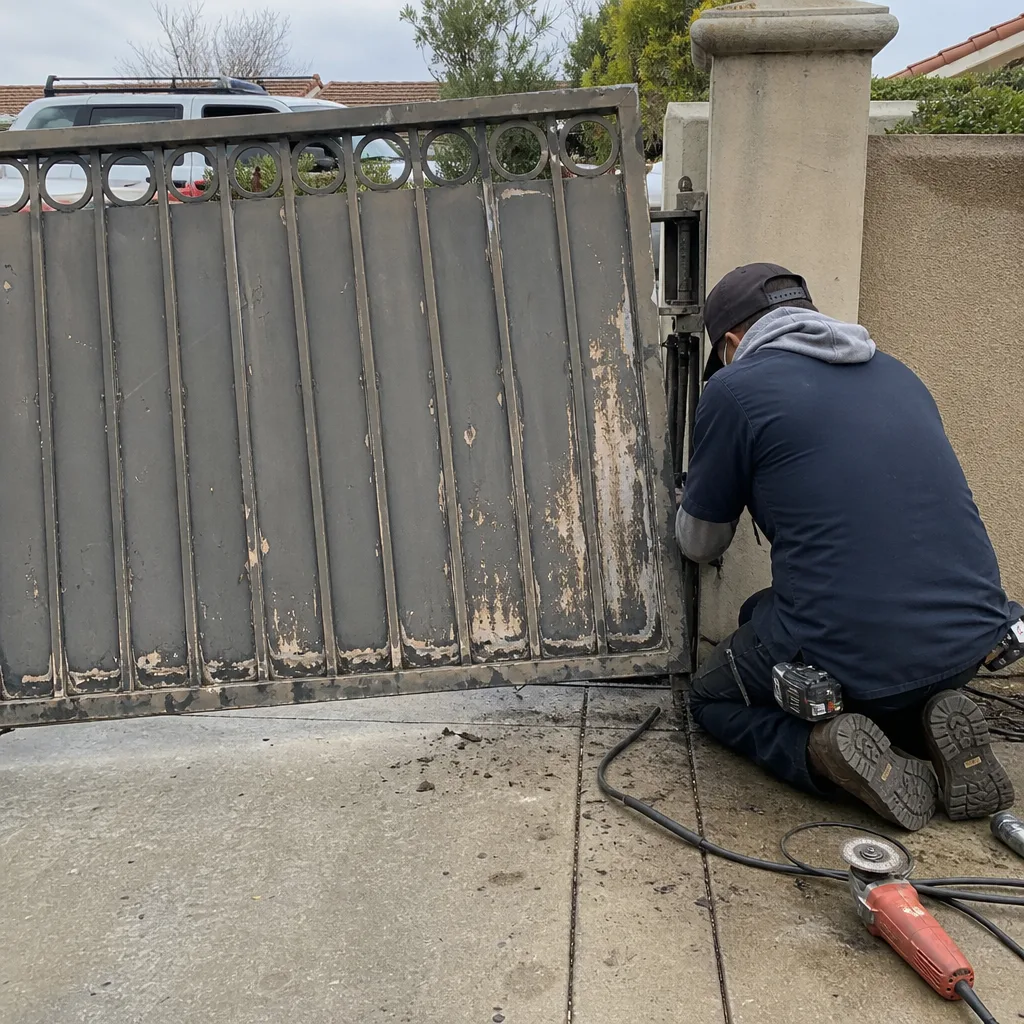 Before
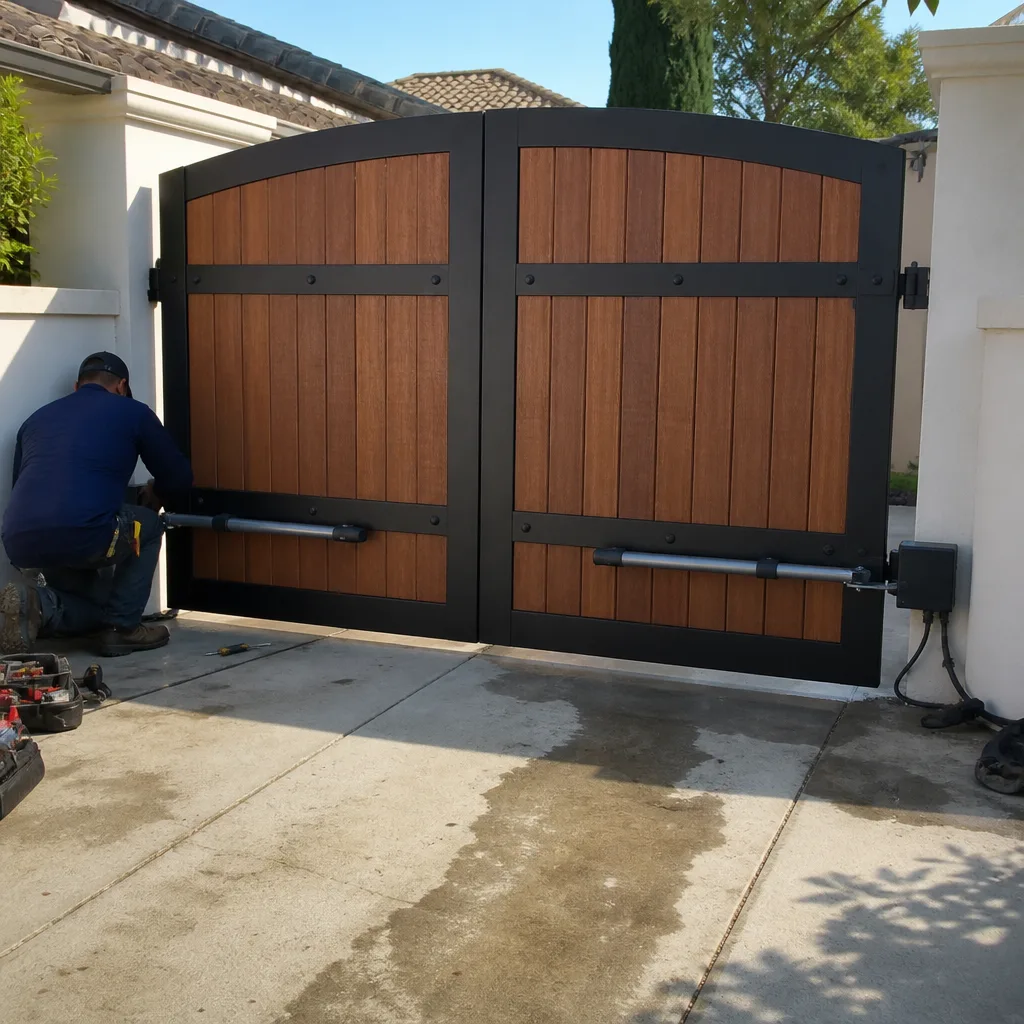 After
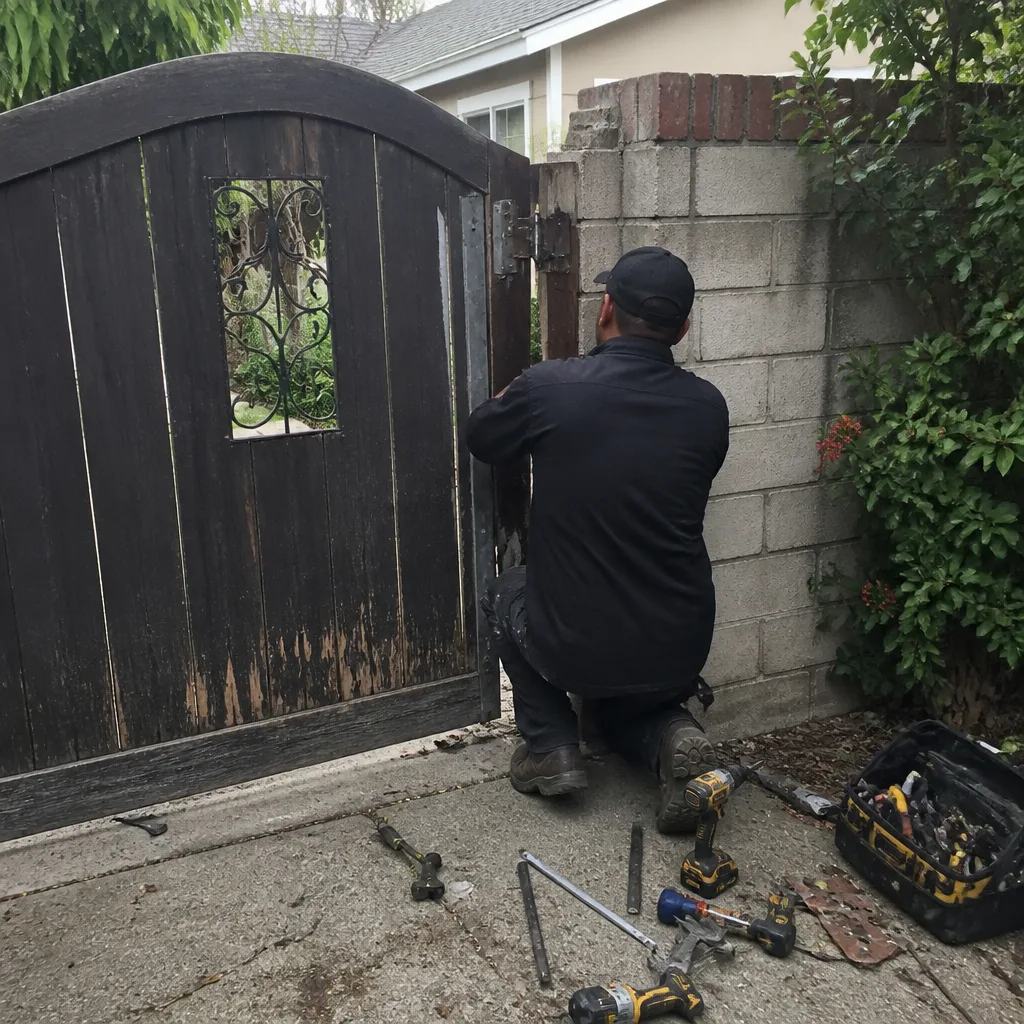 Before
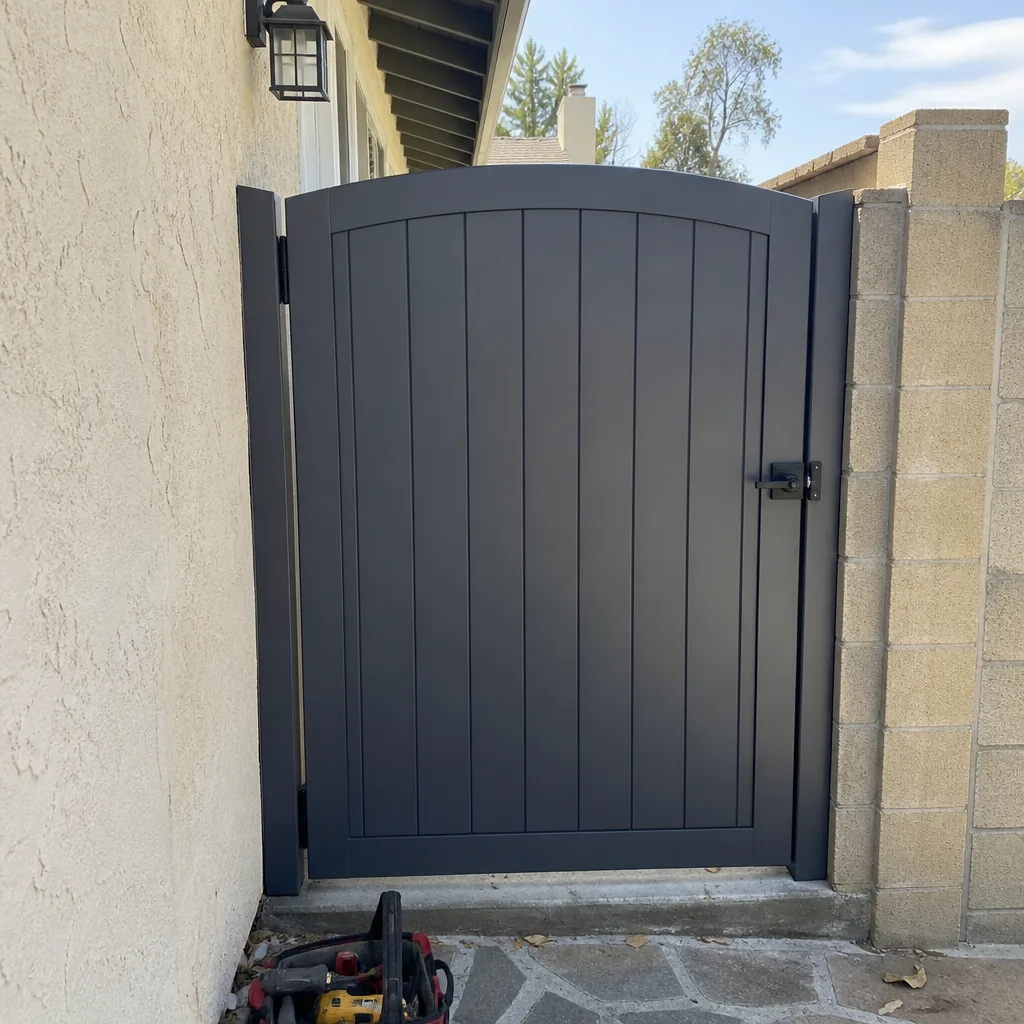 After