
Last updated October 16, 2026
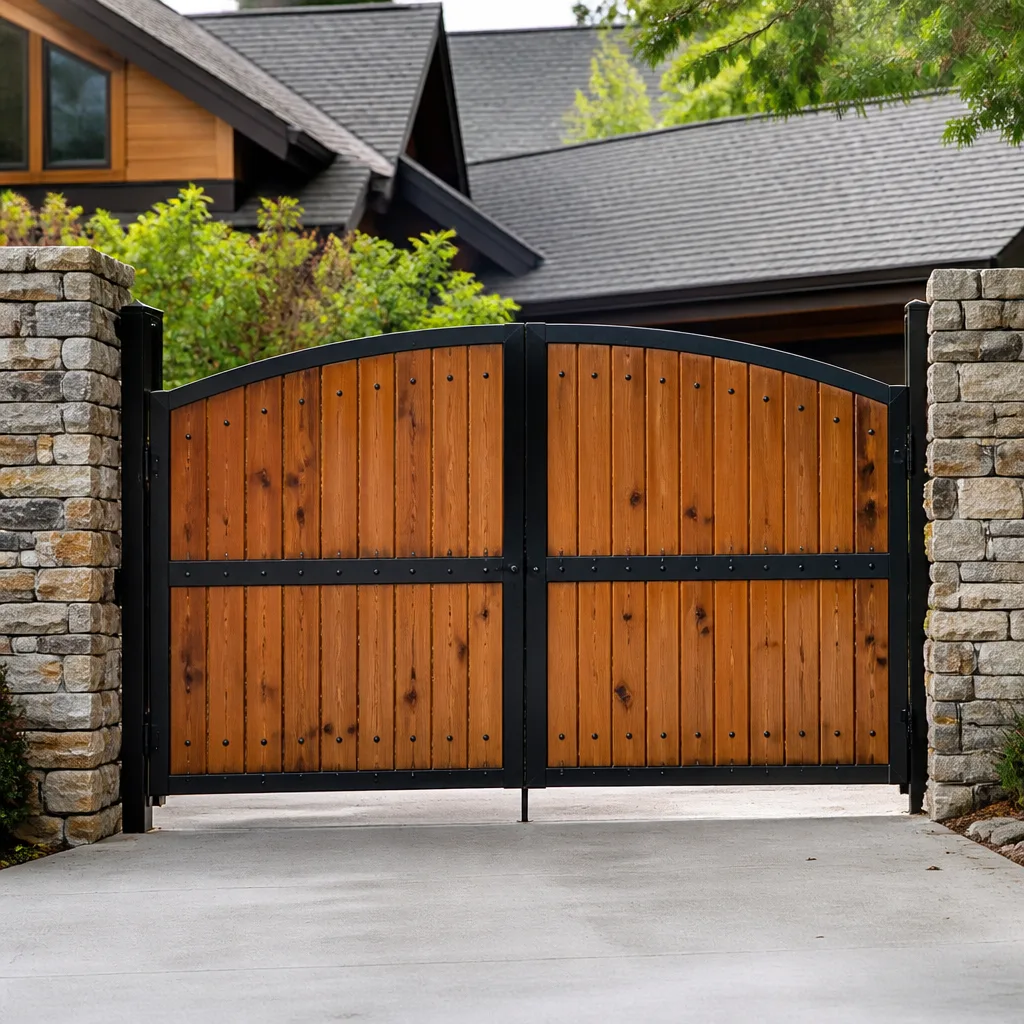 Wood & steel frame
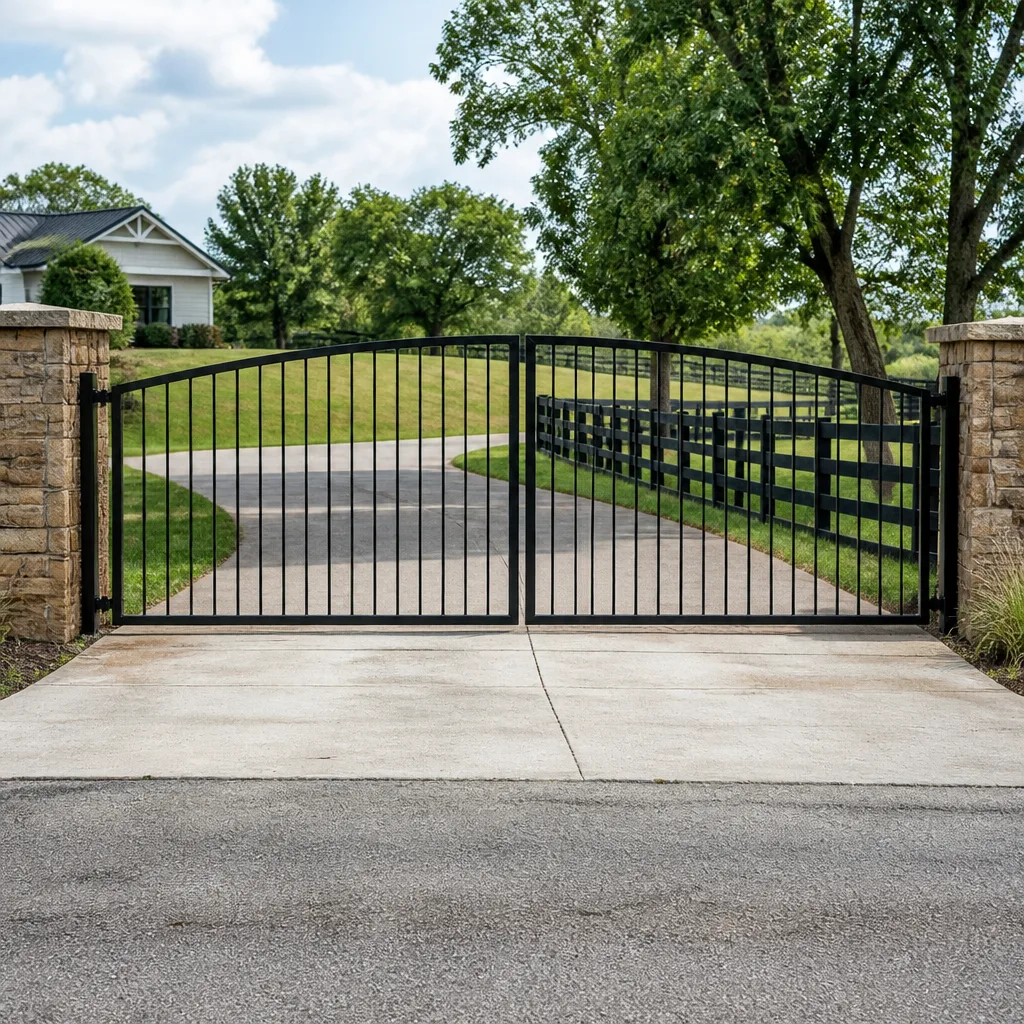 Farm & ranch
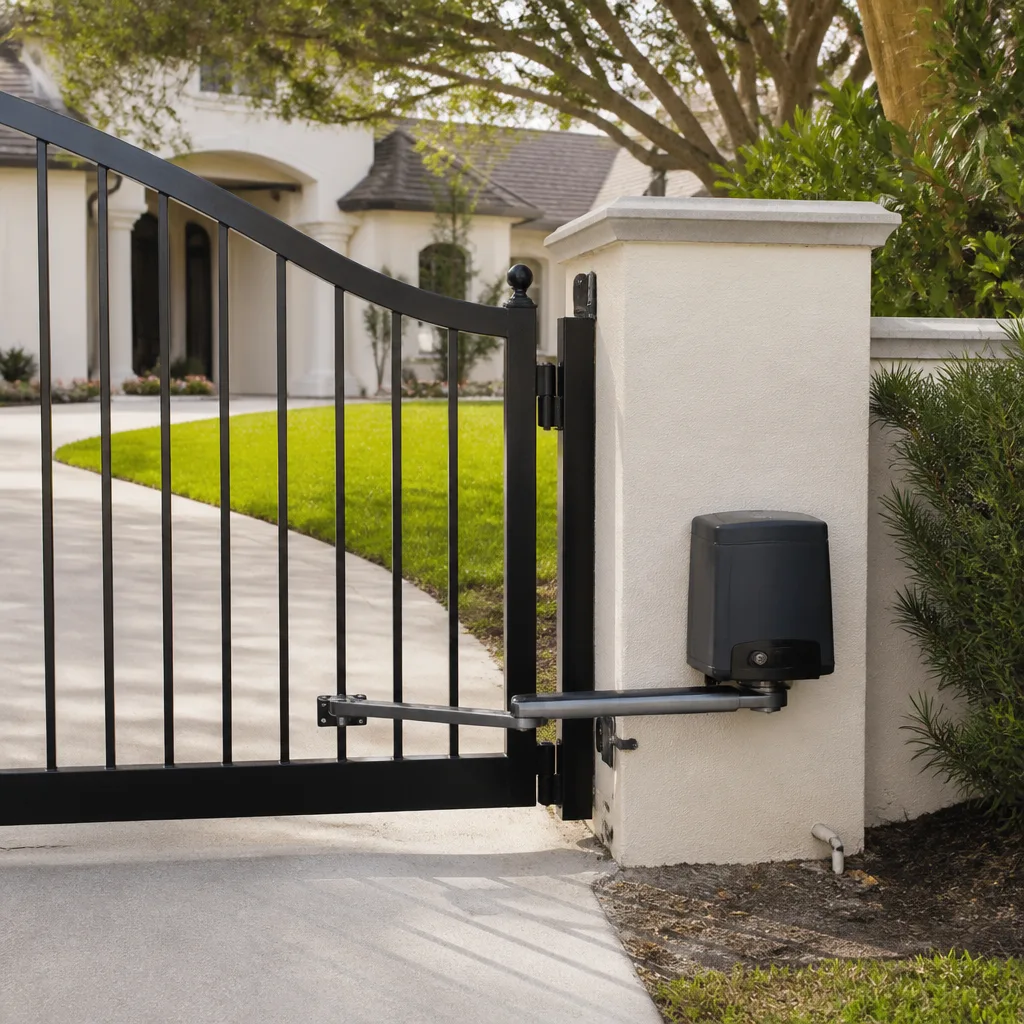 LiftMaster operators
Free on-site gate assessment - hinges, posts, and your LiftMaster or Nice gate operator checked before anything is quoted
The assessment is free and the quote is the invoice.
Get your free estimateGate Repair Maintenance Checklist for Orange County Homeowners
A gate hinge that would last 15 years in Sacramento can pit and seize in four years near Dana Point. The steel is the same. The grease is the same. The zip code is what’s different. Orange County’s coastal salt air, alkali soil, and abrupt Santa Ana humidity swings create a maintenance environment that most national gate checklists simply ignore. This guide was written by the folks who provide our Gate Repair services and unstick those seized hinges, and it covers the actual tasks that prevent the failures we see on service calls every week across Orange County.
Styles & brands we work with
Quick Answer
The most effective gate maintenance checklist for Orange County homeowners starts with a 10-minute monthly walk-around: check hinge points and rollers for grit, test the operator’s auto-reverse and photo eyes, inspect the bottom seal for gaps, and clear the track of debris. Coastal properties within two miles of the ocean need monthly attention, while inland Orange County gates can often hold to a quarterly schedule. The single highest-value task is lubrication with the correct product in the correct spots, performed before the gate starts making noise, not after.
Table of Contents
- Location-Tiered Maintenance: Coastal OC vs. Inland OC
- The 10-Minute Monthly Owner Walk-Around
- Lubrication Guide: Chain Lube, Silicone Spray, and Grease Are Not Interchangeable
- Which Maintenance Tasks Protect Your Warranty (and Which Void It)
- How to Document Maintenance So Your Written Guarantee Stays Enforceable
- Seasonal Maintenance: Santa Ana Winds and Rainy-Season Prep
- Common Mistakes to Avoid
- When to Call a Professional
- Frequently Asked Questions
- The Bottom Line
Location-Tiered Maintenance: Coastal OC vs. Inland OC
Orange County is not one climate. A gate in Newport Beach two blocks from the water lives in a different environment than a gate in Yorba Linda or Rancho Santa Margarita. The maintenance schedule that keeps a coastal gate running will be overkill inland, and the inland schedule will let a coastal gate corrode faster than expected. Here is the split as we’ve seen it on actual service calls from Seal Beach down to San Clemente and inland through Anaheim Hills and Lake Forest.
Coastal Orange County (within about two miles of the ocean)
Salt air settles on everything, and when it mixes with morning fog, it forms a conductive film on metal surfaces. Hinge pins, actuator arms, and exposed bolt heads are the first to show white oxidation. The fix is not exotic: wash the hardware, then protect it. We recommend a monthly rinse of exposed metal components with fresh water from a garden hose, followed by a wipe-down of hinge points and reapplication of a light protective oil. In Dana Point and Laguna Beach especially, the marine layer can sit on hillside gates for hours longer each morning than it does at sea level. Those gates get the worst of it because the fog condenses on the metal while the day is still cool.
- Monthly: Rinse hinge pins, actuator linkage arms, and exposed bolts with fresh water; wipe dry; re-lubricate hinge points.
- Monthly: Inspect the finish on powder-coated steel for chips or scratches; touch up with a color-matched paint pen before rust takes hold.
- Quarterly: Open the operator cover (power off first) and look for salt dust buildup on the circuit board and limit switches. Blow it out with canned air or wipe gently with a dry cloth.
- Twice a year: Check the grounding wire and terminal connections for corrosion; a corroded ground is the silent killer of coastal gate operators.
Inland Orange County (Anaheim Hills, Orange, Yorba Linda, Lake Forest, Mission Viejo foothills)
Inland gates have a different nemesis: alkali soil and fine dust. The soil in many older inland Orange County developments contains enough alkali to wick moisture and salts up into the gate post footings. When irrigation overspray hits the soil every morning, the soil swells and shifts, and the gate post slowly tips. A post that moves half a degree is enough to throw the gate out of alignment so the operator strains, the limit switches miss, and the whole system prematurely ages. The advice here is about water control as much as metal care.
- Monthly during irrigation season: Check that sprinkler overspray is not hitting the gate post or the track. Redirect any spray head that soaks the post base.
- Quarterly: Check gate post plumb with a four-foot level. A quarter-inch drift at the base turns into a half-inch sag at the gate leaf’s outer edge, and the operator fights that change every single cycle.
- Twice a year: Clear the track bed of silty dust that irrigation runoff deposits. Inland dust is fine and gritty; when it gets into the rollers, it acts like sandpaper on the wheel bearings.
- Quarterly: Inspect the bottom seal for gaps, because inland field mice and pack rats move into the smallest opening at the gate’s base, and their nesting material inside the operator housing is both a fire risk and a common cause of shorted limit switches.
The 10-Minute Monthly Owner Walk-Around
You do not need a technician for this check, and you do not need any tools beyond a garden hose, a clean rag, and a flashlight. The walk-around is about noticing small changes before they become $800 repairs, and you can find more guides & resources on our site to help. We have taught this same walk-around to hundreds of Orange County homeowners, and it is the single fastest way to extend the life of a gate and operator. Set a recurring phone reminder for the first Saturday of the month, and make it a 10-minute habit.
Step 1: Cycle the gate once and listen
Open and close the gate completely one time. Stand near the hinge side and then near the latch side. You are listening for three sounds: a scraping noise that means metal is dragging where it should not, a clicking or ratcheting sound that means the chain or belt is slipping or a limit switch is chattering, and a low groan that tells you a hinge point is dry. A healthy gate operator hums at a consistent pitch. Any change in pitch from last month is a data point.
Step 2: Watch the gate’s speed and stop
As the gate travels, watch the speed. It should move at the same rate in both directions and start and stop smoothly, not lurch. When the gate reaches the fully open or fully closed position, it should stop firmly and then the operator should shut off cleanly. If the gate slows down dramatically near the end of travel, bounces, or reverses direction on its own, the limit switches need attention. The limit switch is the small adjustable contact that tells the operator where the gate should stop; when it drifts out of adjustment, the operator keeps pushing after the gate has nowhere to go, and that strain shortens the life of the whole machine.
Step 3: Test the auto-reverse and photo eyes
Place a 2×4 flat on the ground in the gate’s path, then close the gate onto it. The gate should reverse direction when it meets the resistance of the block. Then wave your hand through the photo eye beam, which is the small sensor pair mounted near the bottom of the gate posts on each side. The gate should stop or reverse immediately. These two safety systems are required by law for any automated gate in a residential setting, and testing them is not optional; for details on compliance, see Gate Repair Permits, Codes & Inspections in CA: What You Need to Know. If either one fails, stop using the automatic function and call a professional. A gate that closes onto a child, a pet, or a delivery driver because the auto-reverse was never tested is a tragedy that no maintenance checklist can undo.
Step 4: Check the rollers and track
If you have a sliding gate, run your hand along the track and feel for pits, dents, or packed grit. Remove any pebbles, leaves, or seed pods that have settled in the track bed. Look at the guide rollers, the small wheels mounted on the posts that keep the gate centered as it slides. Each roller should turn freely with a light push. If one roller has frozen solid and the gate is sliding across a flat spot on the wheel, that flat spot is now a grinding tool that will wear a groove in the gate rail.
Step 5: Inspect the bottom seal and weep holes
The bottom seal is the rubber or brush strip attached along the bottom edge of the gate, and its job is not decorative. The seal blocks dust, leaves, and moisture from getting under the gate and into the operator mechanism. Look for gaps, tears, or places where the seal has pulled away from the gate body. Also check for weep holes on the gate’s bottom rail, small drainage holes that let condensation escape. In Orange County’s coastal half, these weep holes clog with windblown sand and dead plant material, and a clogged bottom rail holds water against the steel from the inside, which is how a gate rusts from within before you ever see a bubble on the outside-one of the Gate Repair Warning Signs: A Orange County Homeowner’s Reference Guide covers.
Lubrication Guide: Chain Lube, Silicone Spray, and Grease Are Not Interchangeable
Most gate damage we repair starts as a lubrication mistake. The owner had the right instinct but the wrong product, or the right product on the wrong component. Here is the guide we use when we train our own technicians, written in plain language.
The core rule: metal-to-metal rotating parts get oil or chain lube; sliding plastic parts get silicone spray; closed bearing assemblies get nothing unless the manufacturer says otherwise. Once you know that, the rest is application.
Chain lube (or light machine oil) – for chains, hinge pins, and rotating joints
Chain lube is designed to penetrate into the pins and rollers of a chain while leaving a film that resists being thrown off as the chain moves. For a chain-drive gate operator, run the chain slowly and apply lube to the inside of the loop where it contacts the sprocket. For hinge pins, a few drops of light oil at the top of the pin and a cycle of the gate will draw the oil down into the hinge barrel. Do not over-lubricate; a puddle on the ground under the hinge means you used too much and the excess is now attracting dirt by the molehill.
Silicone spray – for tracks, slides, nylon bushings, and photo eye housings
Silicone spray is a dry-type lubricant that does not hold grit the way oil-based products do. It is the correct product for sliding gate tracks and any plastic or nylon bushing. A light spray along the track’s top edge and the inside of the guide roller channel reduces friction without turning the track into a magnet for Orange County dust. Do not use silicone spray on a chain; it is too light to hold up under sprocket pressure and will be gone within a dozen cycles.
White lithium grease – for metal gears inside the operator, when specified
White lithium grease is the right call for the metal gear sets inside many LiftMaster, FAAC, and Elite operators, but only when the manufacturer’s service literature specifies it. Packing grease into an operator without checking the manual can overload the gearbox, trap heat, and void the warranty. If you are not sure, do not guess. A wrong lubrication choice on an internal gearbox is one of the few maintenance actions that actually voids a gate operator warranty.
What to skip entirely
WD-40 is not a lubricant. It is a water displacer and penetrating solvent. We see it used as hinge lube on half the coastal Orange County gates we service, and the result is a hinge that runs dry within a week and rusts faster because the WD-40 stripped away whatever real lube was there before. Use WD-40 to loosen a seized bolt, then wipe it off and apply the correct product.
Which Maintenance Tasks Protect Your Warranty (and Which Void It)
Gate operator warranties from the major brands are fairly consistent on one point: the warranty covers defects in materials and workmanship, not neglect, abuse, or improper maintenance. Proving you maintained the gate is your responsibility, and the maintenance log in the next section is how you do it. But there are also a handful of owner-performed tasks that manufacturers specifically exclude from warranty coverage when they go wrong.
Tasks that protect your warranty
- Regular lubrication of chains, hinges, and rollers with the correct product. LiftMaster, FAAC, BFT, Elite, and Mighty Mule all publish recommended lubrication schedules in their installation manuals, generally quarterly for residential gates. A periodic lube routine is the only maintenance most manufacturers explicitly ask for.
- Keeping the track clear and the gate balanced. A gate that is out of balance forces the operator to work harder on every cycle, and that overload is visible when a warranty claim is evaluated. Regular track cleaning and hinge inspection is evidence of care.
- Testing the safety systems monthly. The photo eyes and auto-reverse are federal safety devices, and confirming they work shows the installation has been maintained to the required standard.
Tasks that can void a warranty if done incorrectly
- Adjusting limit switches yourself. On a Faac or BFT operator, the limit switch adjustment changes how far the gate travels before the operator stops. Set it wrong and the operator will strain against the mechanical stop every time it runs, which burns the capacitor and toasts the control board. We replace several boards a year in Orange County where the homeowner’s YouTube-guided limit switch adjustment turned a $150 repair into a $600 board replacement.
- Opening the operator gearbox and adding grease. Once the gearbox is opened, the manufacturer considers the assembly compromised unless a factory-approved service procedure is followed. If the gearbox later fails, the claim is likely to be denied. This is a professional-only job.
- Modifying the gate’s physical structure. Welding on new brackets, lengthening the gate leaf, or adding a pedestrian gate through a panel changes the weight and balance the operator was sized for, and that structural change is a warranty red flag for every major gate operator brand.
- Power-washing the operator housing. A power washer will force water into the electrical enclosure no matter how well sealed it looked, and that water damage is classified as misuse, not a defect. If you want to wash the operator cover, use a damp rag and gentle detergent, and never a pressure stream.
How to Document Maintenance So Your Written Guarantee Stays Enforceable
Documentation is the least glamorous part of gate ownership, but it is the part that makes a written guarantee more than a piece of paper. When a repair fails inside the guarantee period, the first question is whether the failure was a workmanship issue or a maintenance lapse. A clear log answers that question in your favor. We have seen homeowners save thousands of dollars because they could show a maintenance record, and we have watched other homeowners eat a repair cost because they could not.
- Start a simple note in your phone or a small pocket notebook. The note should have four columns: date, task performed, product used, and any observation. “March 3, rinsed hinges, applied 3-in-1 oil, right hinge squeaking” is enough. You do not need a narrative.
- Take a photo after every maintenance session. A picture of the gate, the hinge, or the clean track from that day, timestamped by the phone, is incontrovertible evidence that the maintenance actually happened. Store the photos in a dedicated album on your phone so you can pull them up instantly.
- Keep the receipts for whatever products you use. The lubricant, the touch-up paint, the new seal strip. A receipt plus a photo together is strong evidence that the maintenance was real, not reconstructed after the fact.
- File the repair invoice and the written guarantee together. When Portcullis Gate Repair completes a job, the written guarantee is stamped right on the invoice, and we recommend keeping that document in the same place as your maintenance log. If a repair fails inside the 365-day window, the guarantee, the photos, and the log together make the claim a formality instead of an argument.
- Note anything unusual even if you choose not to fix it that day. “Bottom seal has a one-inch gap on the latch side, will monitor” is a useful entry. Six months later, when a rodent nests inside the operator housing, you have dated proof the gap appeared earlier and was monitored, not ignored.
One practical note for Orange County homes with a community HOA: some HOAs maintain the gate on the community’s private road, and some do not. If your home sits behind a shared gate, check your CC&Rs to see whether the gate is the HOA’s responsibility or yours. If it is the HOA’s, send the board a copy of this checklist and offer to do the walk-around monthly; an HOA gate that fails during the holidays becomes a neighborhood-wide headache.
Seasonal Maintenance: Santa Ana Winds and Rainy-Season Prep
Orange County essentially has two seasons that matter for gate maintenance: the dry Santa Ana season that runs roughly October through January, and the rainy season that hits between December and March. Each season has a distinct failure signature, and each is preparable.
Santa Ana season: dry air and airborne grit
Santa Ana winds do not just dry out the chaparral; they dry out the lubricant film on your gate hardware and deposit a fine layer of grit into every exposed moving part. The relative humidity can drop from 70% to 15% in a single afternoon, and the next morning every hinge on the property will sound like a screen door in a dust storm. In our experience across inland Orange County, the most common Santa Ana failure is a gate operator that overheats because the hinge points and track have gone dry just as the operator’s cooling fan is fighting the same dust. Keep a light oil on hand during Santa Ana months and hit the hinge pins after every major wind event, not just on a monthly schedule.
Also check the operator’s cooling vents. The louvered openings on the side of the operator enclosure are the machine’s lungs, and during Santa Anas they fill with fine dust and dead insects. If the vents clog, the operator runs hot, and heat is the number one killer of control boards. A vacuum with the brush attachment on the vents after each Santa Ana event is a five-minute task that can forestall a board replacement that runs $300 to $600 on most LiftMaster, Elite, and Viking residential models.
Rainy season: water, debris, and shifting soil
When the rains come, the dry Orange County soil swells and shifts. A gate post that was plumb in September can be two degrees out by February, and that shift is enough to change the gate’s balance and stress the operator. The first good rain of the season is the right moment to re-check plumb and re-check the gate’s travel path for new interference from roots, ground heave, or washed debris.
Clear the track of leaves and mud immediately after any significant storm. Wet leaves left in a steel track create a localized corrosion cell that pits the metal within a season. And check the bottom seal for gaps: a seal torn during the dry season may not have mattered all summer, but in the rain a one-inch gap funnels water directly under the gate and into the operator foundation every time it rains.
Common Mistakes to Avoid
- Using WD-40 as a regular lubricant. As covered above, WD-40 displaces water but does not lubricate. It also strips existing lube. On coastal Orange County gates, the WD-40 habit is the single most common maintenance mistake we see on service calls from Huntington Beach to San Clemente.
- Lubricating the trickiest part of the operator without reading the manual first. Every gate operator has a service interval and a specified lubricant; guessing at either one can damage the gearbox and void the warranty.
- Skipping the auto-reverse test because the gate has “always worked fine.” The auto-reverse system can fail silently, and no one knows until the gate meets an obstruction. Monthly testing is non-negotiable.
- Ignoring a noisy hinge because it still turns. A squealing hinge is a hinge that is already wearing. By the time it seizes, the gate leaf is torquing the entire frame, and a $25 hinge replacement has become a $400 frame repair.
- Leaving irrigation overspray on the gate post. Inland Orange County developments with automatic sprinklers are the worst offenders. Alkali soil plus daily overspray eventually tips the post, and the operator pays the price on every cycle.
- Painting over visible rust without treating the metal first. Rust under paint keeps spreading. Wire-brush the rust, apply a rust converter, then touch up the finish. Otherwise you are burying the problem and making it invisible while it grows.
When to Call a Professional
Call a professional when the gate reverses unexpectedly, when the operator makes a grinding sound, when the photo eyes stop responding, or when the gate has visibly sagged or dragged on the post. These are not maintenance issues; they are failure conditions. Attempting a DIY fix on a high-tension hinge, a torsion spring, or an operator’s internal gearbox can cause serious injury, and we recommend any repair involving those components be handled by a trained technician. Portcullis Gate Repair Orange County offers free estimates in Orange County, and you are always welcome to call (820) 529-0801 for a second opinion on anything this guide has flagged. A technician will arrive in uniform, give you the written price before any work starts, and back the repair with the 365-Day Done Right Promise.
Frequently Asked Questions
Coastal Orange County homes within two miles of the ocean should lubricate hinge pins, chains, and rollers monthly, while inland Orange County homes can often go quarterly. After any Santa Ana wind event, treat hinge pins regardless of schedule. A dry hinge is the failure you can hear coming, so let the sound be your guide.
Use silicone spray on sliding gate tracks and any plastic or nylon guide component. Oil-based products like chain lube or grease will attract grit and turn the track into an abrasive paste. A light application of silicone spray every month during dry season keeps the track running clean and friction-free.
We do not recommend it. The limit switch adjustment on a FAAC, BFT, or LiftMaster operator is a small change with outsized consequences, and getting it wrong can strain the operator, burn out the capacitor, and potentially void the warranty. This is a job for a technician who performs these adjustments daily and has the specific model’s service literature in hand.
Most residential gate repairs in Orange County fall between $150 and $800 depending on the component. A hinge replacement or limit switch adjustment usually runs $150 to $350, while a new control board or gearbox rebuild typically lands between $400 and $800. Portcullis Gate Repair always writes the price down before beginning work, so you know the number before a single bolt is turned. Call (820) 529-0801 for a free estimate on your specific gate.
Yes, provided the maintenance was done correctly and documented. Manufacturers expect owners to perform routine lubrication and safety tests, and a written log with photos strengthens any warranty claim. The tasks to avoid doing yourself are internal gearbox work, limit switch adjustments, and structural modifications; those are the ones that generate warranty denials.
The Kingswell Guarantee is a written promise included with every Portcullis Gate Repair invoice, and it covers the repair for 365 days. If the repair fails inside that period, we return and correct it at no charge under the 365-Day Done Right Promise. The guarantee is part of the written price and the written terms you receive before work begins, not a verbal promise made on the doorstep.
The Bottom Line
The gate maintenance checklist that works in Orange County is one built for Orange County: monthly hinge and track care near the coast, irrigation control and plumb checks inland, the right lubricant on the right component, and a written record of it all. Ten minutes a month, a few photos, and a seasonal eye on the Santa Ana and rain patterns will keep most gates running for years beyond their expected service life. When something does go wrong, Portcullis Gate Repair Orange County is a Kingswell company that answers the phone 24/7, shows up in a real arrival window, and puts the price and the 365-day guarantee in writing before any work begins.
For a full look at the services we provide across Orange County, start with the Portcullis Gate Repair Orange County home page, or explore Gate Repair in Orange County, Gate Installation in Orange County, and Electric Gate Repair in Orange County for more detail on what each service includes.
Written by Dean Prescott, Owner at Portcullis Gate Repair Orange County, serving Orange County since 2008.
See the difference
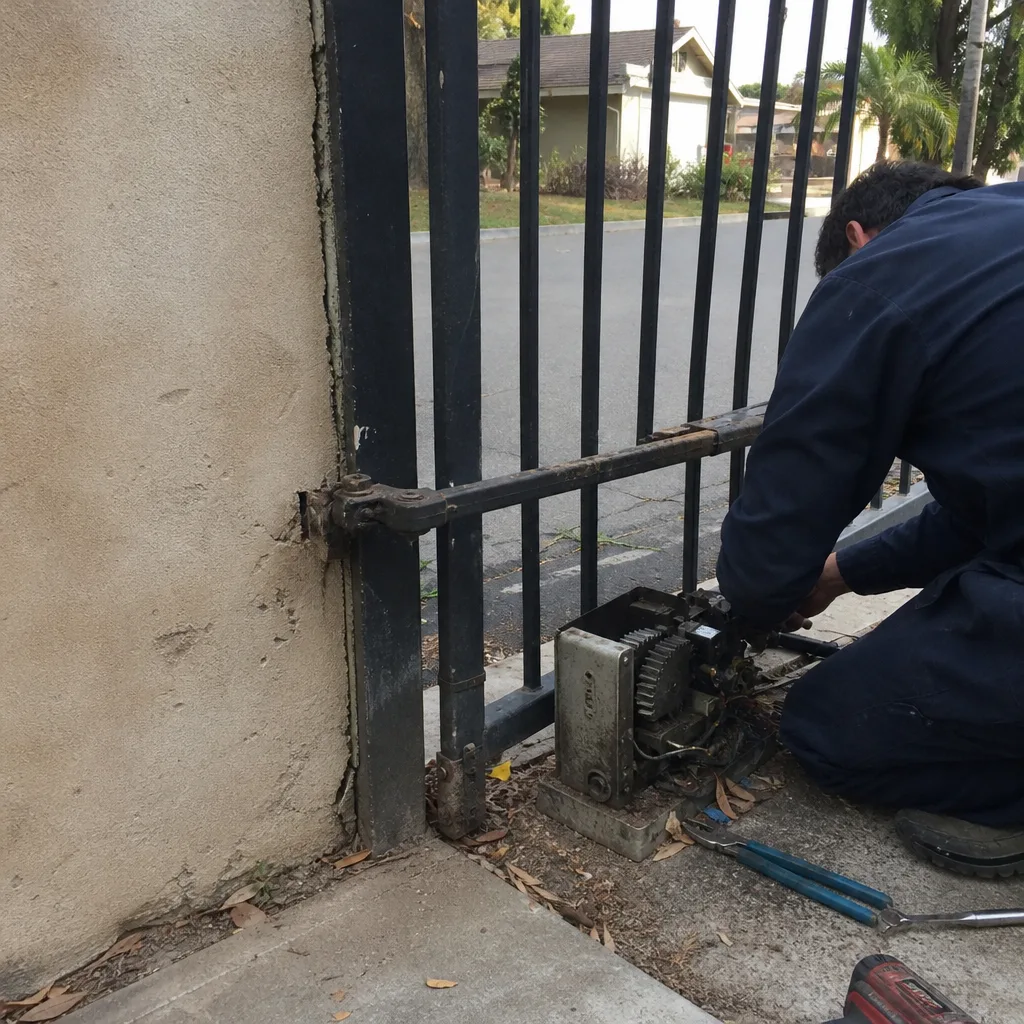 Before
 After
 Before
 After
 Before
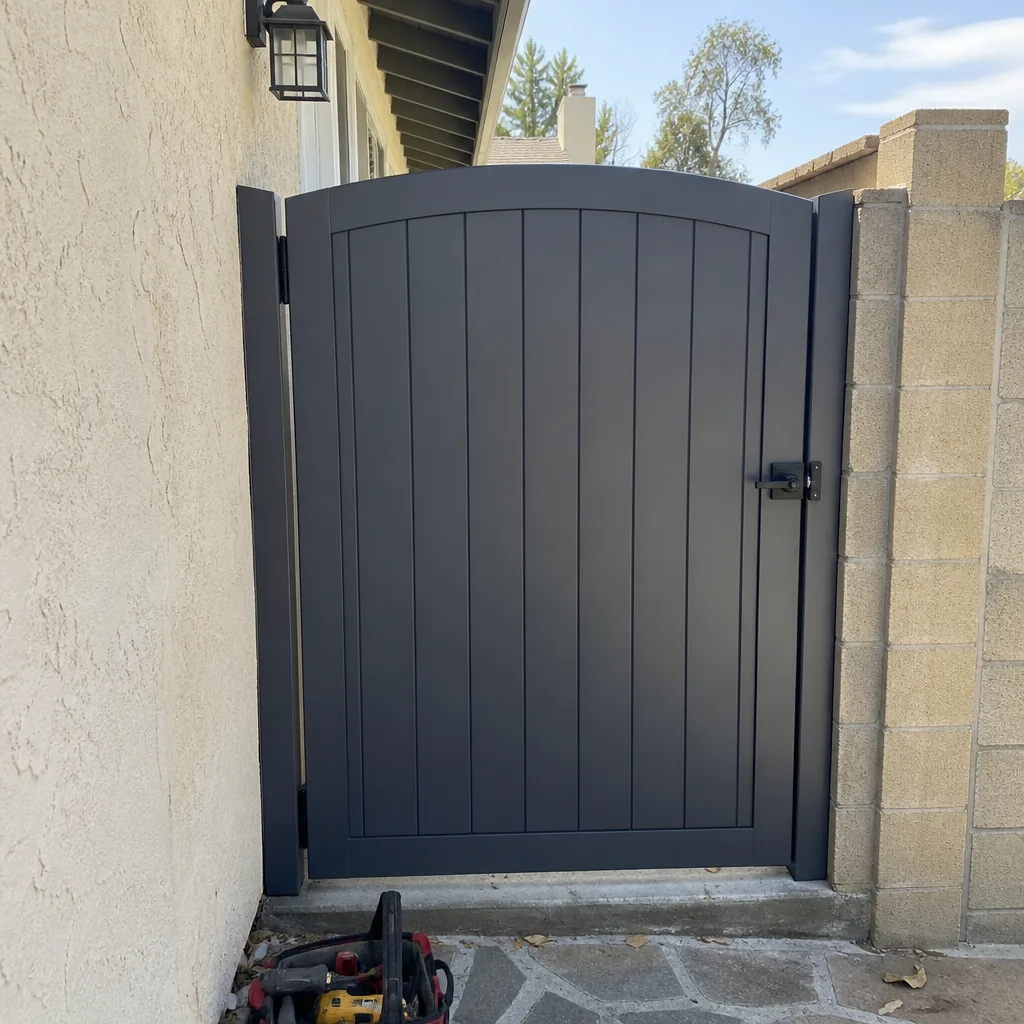 After