
Last updated October 16, 2026
 Wood & steel frame
 Farm & ranch
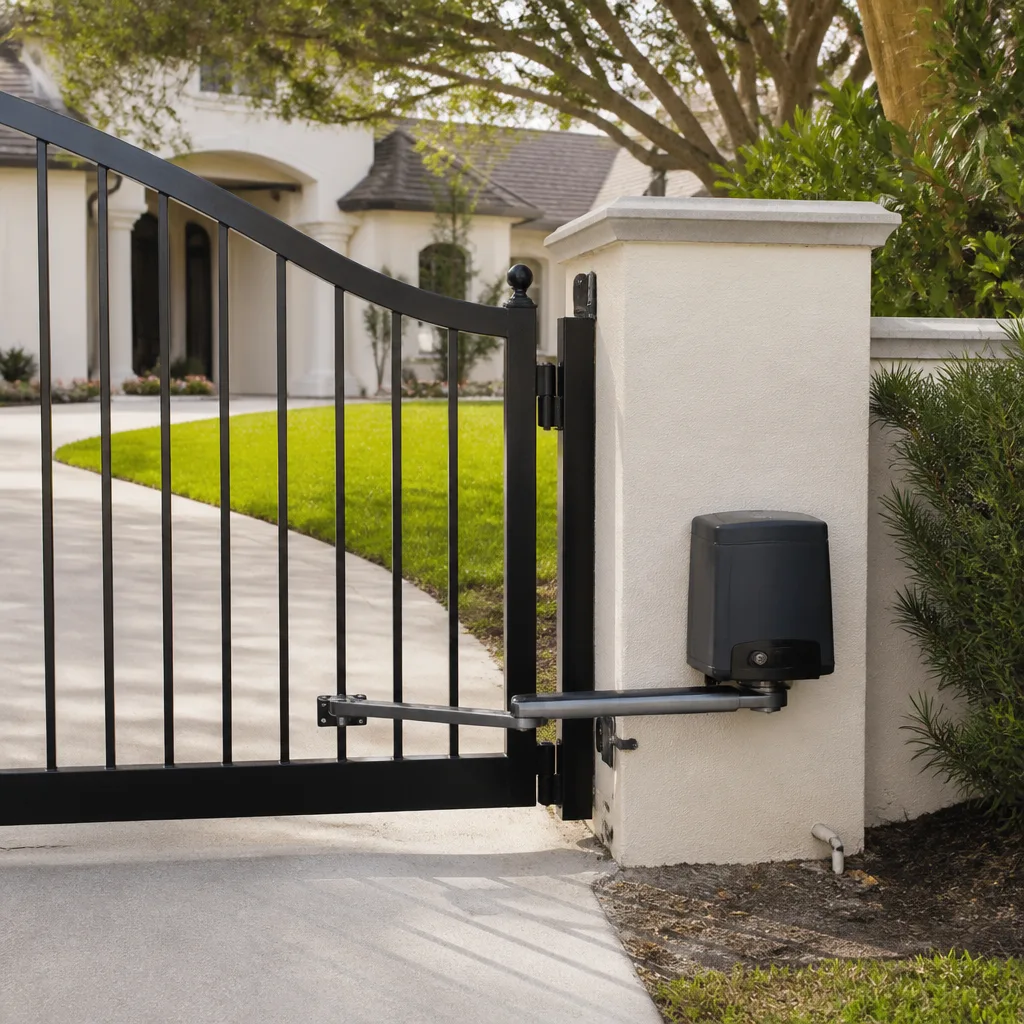 LiftMaster operators
Free on-site gate assessment - hinges, posts, and your LiftMaster or Nice gate operator checked before anything is quoted
The assessment is free and the quote is the invoice.
Get your free estimateGate Repair Permits, Codes & Inspections in CA: What You Need to Know
Most Orange County homeowners we talk to assume California has one set of gate rules. It doesn’t. A repair that sails through in Anaheim can trigger a stop-work order in Irvine, and the difference usually comes down to one word: automation. This guide walks through the actual permit triggers for gate repair and replacement, how UL 325 safety standards get enforced at inspection, what HOAs can demand beyond the city, and the retroactive path if a previous owner left you with an unpermitted gate. If you’ve been burned by a contractor who promised “no permit needed” and then vanished, this is the plain-English version of what actually applies.
Styles & brands we work with
Quick Answer
Like-for-like repair of an existing gate in California, including swapping a failed operator for a similar one, typically does not require a permit. Adding a new automatic gate where a manual one stood, pouring new post footings, or changing fence height almost always does. The permit responsibility falls on the homeowner, not the contractor, even when the contractor files the paperwork.
Table of Contents
- Repair vs. New Installation: Where Cities Draw the Permit Line
- When a Gate Permit Is Required in California
- When No Permit Is Required
- Orange County City-by-City: Who Enforces What
- UL 325 and What Inspectors Actually Check
- HOA Approval: The Parallel Track That Can Trap You
- Previous Owner Installed an Unpermitted Gate? Here’s the Fix
- What Permits and Inspections Cost in Orange County
- Common Mistakes to Avoid
- When to Call a Professional
- Frequently Asked Questions
- The Bottom Line
Repair vs. New Installation: Where Cities Draw the Permit Line
The single most important distinction in California gate permitting is the difference between a repair and a new installation. Most cities define “repair” as restoring something to its original condition: replacing a broken hinge, swapping a worn wheel, swapping a failed circuit board, installing a new operator that matches the gate’s existing design and function. “New installation” means changing the fundamental character of what’s there: adding automation to a manual gate, widening a driveway and moving the gate, pouring new concrete footings for larger posts, or raising the overall height above what the original fence plan approved.
The trigger is normally the building department’s interpretation of “change of scope.” If the work you’re doing could be described as “the gate now does something it didn’t do before,” you’re probably in permit territory. If the work is “the gate does exactly what it did before, except now it works again,” you’re probably not. This line holds across most Orange County jurisdictions, though exactly where each city draws it varies. Some are strict about operator swaps on commercial properties. Some are lenient about residential work that doesn’t touch the fence line.
In our experience serving Orange County since 2008, the most common permitting surprise is automation. A homeowner replaces a manual swing gate with an automatic one, figures it’s just a bolt-on motor, and then gets a notice from the city because the property now has a “motorized access control device” that triggers different code provisions, including UL 325 entrapment protection. The motor isn’t the issue. The safety equipment that legally must accompany it is.
When a Gate Permit Is Required in California
Certain scenarios consistently trigger permit requirements across California, regardless of city. Here are the ones we see most often in Orange County:
- Adding automation to a manual gate. This is the biggest one. Once a gate moves under motor power, it becomes an “automatic vehicular gate” under California Building Code Chapter 3 and must meet UL 325 entrapment protection standards, including photo eyes, contact edges, or both, depending on the gate type and operator class.
- Pouring new post footings. If your gate posts are leaning and the fix involves cutting out old concrete and pouring new footings, most cities require a permit because the footing depth and diameter affect structural safety. The standard in Orange County’s clay-heavy soils is typically 36 to 48 inches deep, but some hillside areas in Laguna Beach require engineer-stamped depths.
- Changing the driveway entrance width. Widening a gate opening means moving posts, which means new footings, which means a permit. It also changes the property’s access profile, which some cities review for fire department turnaround requirements.
- Increasing fence or gate height above local limits. Most Orange County cities cap residential fence height at 42 inches in front yards and 6 feet in back and side yards, measured from grade. A gate taller than the adjacent fence section usually needs a variance or at least a plan check.
- Installing a new gate as part of a larger fence or hardscape project. If you’re already pulling a permit for a fence, driveway, or retaining wall, the gate gets folded into that same permit. Trying to separate it out usually doesn’t work.
- Commercial and multifamily properties. Different standard entirely. Commercial automatic gates nearly always require a permit and often a licensed contractor sign-off, because the entrapment risk profile is higher when the gate serves employees, tenants, or the public.
Here’s a numbered step-by-step for what a typical residential automatic gate permit looks like in Orange County:
- Confirm the trigger. Check with your city’s building department whether your specific work requires a permit. Many have online “Do I Need a Permit?” tools. If you’re working with a gate company, they should tell you directly, not vaguely.
- Prepare the submittal. For new automation, most cities want a site plan showing gate location, driveway width, distance to property lines, and a printout of the operator’s UL 325 compliance documentation. Simple residential jobs usually don’t need an engineer’s stamp, but some hillside cities differ.
- Pay the plan check fee. This runs anywhere from $85 to $400 depending on the city and project valuation. Plan check takes one to three weeks in most Orange County jurisdictions, longer in Newport Beach during building season.
- Complete the work. The installation proceeds after permit issuance. The contractor must have the permit card posted on site during the work.
- Schedule inspection. Once the gate is installed and the safety devices are live, the inspector comes out to verify the entrapment protection actually works. They test photo eyes, check for pinch points, and confirm the operator reverses on contact where required.
- Close the permit. After passing inspection, the permit is signed off and filed. Keep the final sign-off document. You’ll need it if you ever sell the property.
When No Permit Is Required
Most of the repairs we do in Orange County fall into the no-permit category, and that’s legitimate. Here’s what generally does not need a permit:
- Replacing a failed gate operator with a like-for-like unit. If you have a BFT or FAAC swing operator that burned out and we’re putting in a comparable model with the same function on the same gate, most cities treat that as a repair. No permit needed. We carry service experience across FAAC, BFT, Linear, Viking, and five other major brands, so the swap usually goes quickly.
- Replacing a circuit board, capacitor, limit switch, or receiver. Component-level repair on an existing operator falls firmly under maintenance, not construction.
- Adjusting existing photo eyes, contact edges, or closing force. Tuning safety devices is maintenance. Replacing them with equivalent units is also maintenance.
- Replacing hinges, rollers, and track sections. As long as the gate’s structure doesn’t change and no new footings are poured, this is repair work.
- Welding reinforcement onto an existing gate leaf. This is borderline in some cities, but if the fix doesn’t change the gate’s footprint, height, or function, most Orange County building departments treat it as maintenance. If the gate is in a historic district, different rules may apply.
- Replacing an existing manual gate with another manual gate of similar size. No automation, no footing changes, same height, same width. This is usually considered a cosmetic swap.
The caveat: “usually” is doing work here. Cities revise their interpretations, and a building inspector who shows up for an unrelated reason can flag work they believe should have been permitted. When in doubt, call the building department and ask. Most are happy to answer a simple scoping question, and the answer is more reliable than a contractor’s assurance.
Orange County City-by-City: Who Enforces What
Orange County has 34 incorporated cities plus unincorporated county land, and gate enforcement is not uniform. Based on the permit volume and inspection activity we’ve seen in the field, here’s how the landscape breaks down:
Irvine: Strict on automation
Irvine has one of the most active code enforcement departments in the county, and its inspectors are trained to spot automatic gates that were added without permits. The city’s newer developments, particularly in the Great Park and Portola Springs areas, have strict HOA design standards layered on top of city code. In Irvine, an automatic gate on a residential driveway that wasn’t part of the original tract map is a common flag. The city is particularly watchful about gates that open outward across sidewalks or into the public right-of-way.
Newport Beach: Slowest plan check, strictest review
Newport Beach plan check times run longer than anywhere else we work, partly because many properties sit in designated view corridors or on geologically sensitive slopes. A new automatic gate in Newport Coast or Corona del Mar that requires new footings will likely need a soils report if it’s on a hill, and that adds both time and cost. The city also enforces strict driveway approach standards, meaning a gate set too close to the street can require relocation.
Laguna Beach: Most likely to require an engineer
Laguna Beach’s hillside terrain and coastal overlay zones mean that a gate project involving new footings or significant weight changes often triggers an engineer’s stamp. The city is also aggressive about protecting public viewsheds, so a gate that’s taller than the existing fence line draws scrutiny. On the plus side, Laguna Beach building staff are typically responsive to scoping questions, which means you can get a clear answer before committing.
Anaheim, Fullerton, Orange: More lenient on residential repairs
The older, flatter cities in central and north Orange County tend to be more permissive on like-for-like repairs and less aggressive about chasing down unpermitted residential gates. That doesn’t mean permits are optional when the work clearly triggers one, but the enforcement posture is quieter. In Anaheim’s older neighborhoods, for example, we’ve seen many automatic gates that were installed without permits and never flagged, because the city focuses its enforcement resources on commercial properties and safety complaints.
Unincorporated Orange County: Follows county building code
Unincorporated areas like North Tustin, Rossmoor, and the canyon communities operate under the Orange County Building Division in Santa Ana. Enforcement on residential gate work is generally moderate, with most active attention on safety compliance for automatic gates that serve multiple homes or access to open space. The county is easier to work with than some cities on simple residential automation, but the paperwork still moves through the same plan check system.
What this means practically: the same gate project can have a very different permitting path depending on where in Orange County you live. A homeowner in Anaheim who adds an automatic operator to an existing manual gate might proceed with minimal friction. The same project in Irvine could draw a code enforcement notice. This patchwork is exactly why we tell every Orange County customer to ask the city directly, regardless of what a contractor claims.
UL 325 and What Inspectors Actually Check
UL 325 is the safety standard for automatic gate operators, and it’s the code reference that actually matters for most Orange County inspections. The standard exists because automatic gates have killed people, primarily children, and the requirements exist to prevent entrapment. When an inspector comes out to look at a newly automated gate, they’re not admiring the welding. They’re checking entrapment protection.
Here’s what a typical inspection covers:
- Photo eyes (photoelectric sensors). These are the small transmitter-receiver units mounted near the gate opening, usually at two heights. If anything breaks the beam while the gate is closing, the gate must stop and reverse. The inspector will test this by walking through the beam mid-cycle.
- Contact edges or safety edges. On swing gates where a photo eye can’t cover the full arc of travel, a pressure-sensitive edge on the leading edge of the gate serves as the backup. When the edge touches something, the gate reverses. Inspectors test these by applying light hand pressure.
- Closing force limit. The operator’s internal force setting must be dialed down low enough that the gate won’t crush a small body part. The inspector may test this with a force gauge, particularly on commercial installations.
- Warning placards. UL 325 requires permanent warning signs on both sides of an automatic gate. Missing placards are an automatic fail in most jurisdictions.
- Separation distances. Inspectors check for pinch points between the gate and the post, and verify that gaps meet the standard’s dimensional requirements. A gate that creates a 3-inch gap at the hinge is a violation because a child’s finger can fit into it.
The gate operator itself must be listed as UL 325 compliant. We work on all the major compliant brands, including Linear, Viking, FAAC, and BFT, and every operator we install meets the current standard. But the operator listing alone doesn’t pass an inspection. The entrapment protection devices, their placement, and their function are what the inspector is actually evaluating.
HOA Approval: The Parallel Track That Can Trap You
One of the most expensive mistakes an Orange County homeowner can make is assuming that a city permit means the gate is fully legal. In communities with a homeowners association, HOA approval is a separate and often more stringent track. You can pass city inspection and still be in HOA violation.
Most Orange County HOAs have architectural review committees that must approve any change visible from the street or affecting the property’s exterior. A new gate, and often a replacement gate with a different design, falls under that authority. The HOA’s design standards may prohibit automatic gates entirely, or restrict them to certain operator types, or require that the gate be set back a specific distance from the sidewalk so a car can queue off the street.
The typical failure pattern works like this: a homeowner gets city approval, installs the gate, passes inspection, and then receives a letter from the HOA demanding removal or modification because the architectural review committee never signed off. The HOA’s enforcement mechanism is fines and liens, which persist even if the city is perfectly happy. We’ve seen HOAs in Irvine and Mission Viejo force homeowners to repaint, reposition, or remove gates that the city had already approved.
The practical advice: check both tracks before you start. Ask your HOA management company for the architectural review process, get the approval in writing, and only then apply for the city permit. The HOA process can take 30 to 90 days, so factor that into your timeline. And if you’re buying a home with an existing automatic gate, request the HOA’s written approval from the seller. If it doesn’t exist, you may be inheriting a violation.
Previous Owner Installed an Unpermitted Gate? Here’s the Fix
This scenario comes up constantly in Orange County, especially in older neighborhoods where an automatic gate has been on the property for years but no one can find the paperwork. Maybe the previous owner bought the property with the gate already installed. Maybe they installed it and told the buyer it was permitted when it wasn’t. Either way, you now own a gate with no permit history, and that can complicate a future sale, an insurance claim, or a renovation project.
California has a process for this called a retroactive permit, sometimes called a “permit after the fact.” Here’s how it works:
- Determine what’s actually unpermitted. Pull the property’s permit history from the city building department. If the permit was never issued, the gate is unpermitted. If a permit was issued but never finalized, you may just need a final inspection.
- Bring the gate into compliance first. Before you apply, make sure the gate actually meets current code. An automatic gate that was installed in 2012 without photo eyes will not pass a retroactive inspection. You’ll need to add the entrapment protection before the inspector will sign off.
- Submit the retroactive permit application. The paperwork is the same as a new installation, with the added component of explaining why the work occurred without a permit. In most Orange County cities, the penalty is either built into a higher fee or assessed separately.
- Pass the inspection. The inspector will evaluate the gate against current code, not the code in place at original installation. This is the part that surprises people: you have to meet today’s standard, not yesterday’s.
- Close the permit. Once signed off, the gate is legally permitted and the file is updated. Keep the sign-off document with your property records.
The realistic cost range for a retroactive permit in Orange County runs from about $400 to $1,800, depending on the city, the type of gate, and whether you need to add safety equipment. That’s on top of any repair work required to bring the gate into compliance. Some cities double the standard permit fee as a penalty. Others simply charge a standard permit fee and move on. Laguna Beach and Newport Beach tend to be at the higher end. Anaheim and Fullerton are usually at the lower end.
One more point that rarely gets discussed: if the unpermitted gate caused an injury, the homeowner’s insurance may deny the claim on the basis that the gate was illegal work. That’s a hard conversation to have after the fact, and it’s the strongest argument we can give for clearing up an unpermitted gate before a problem occurs.
What Permits and Inspections Cost in Orange County
Permit fees in Orange County are not standardized. They’re set by each city’s fee schedule, and they’re typically calculated as a percentage of the project valuation for commercial work or a flat fee for simple residential work. Here’s a realistic range based on what we’ve seen customers pay across the county:
- Simple residential operator swap with no structural work: $0 (no permit required in most cities)
- Automatic gate installation on an existing manual gate, single-family residential: $180 to $420 for permit plus plan check
- New gate with new footings and automation, single-family residential: $350 to $850 for permit, plan check, and inspection
- Same as above, but in Newport Beach or Laguna Beach with soils report or engineer stamp: $850 to $2,200 total including consultant fees
- Commercial or multifamily automatic gate: $800 to $3,000+ depending on project valuation and engineering requirements
- Retroactive permit with penalty, residential: $400 to $1,800 including the penalty and any required safety upgrades
These are permit and inspection costs only. They don’t include the gate work itself, the operator, or the safety devices. A complete new automatic gate installation in Orange County with permits typically runs $4,500 to $12,000 depending on size, materials, and operator brand. A like-for-like operator repair runs $350 to $900 in most cases. The permit is a small slice of the total, but skipping it creates a much larger liability.
Common Mistakes to Avoid
- Trusting the contractor’s claim that “no permit is needed” without verifying. Your name is on the property, so the city comes after you, not the contractor. Every Orange County building department will answer a scoping question by phone or email, and that answer is free.
- Automating a driveway gate without adding entrapment protection. UL 325 compliance isn’t optional because automatic gates are dangerous if the safety devices aren’t present. Installing an operator without photo eyes or contact edges on a swing gate is a serious safety issue that can also void your insurance.
- Checking with the city but not the HOA. Many Orange County communities, especially in Irvine, Mission Viejo, and Rancho Santa Margarita, have strict architectural standards for gates. Passing city inspection doesn’t protect you from an HOA violation letter or fine.
- Paying for a gate without confirming the permit was closed. An issued permit that was never finalized is just as problematic as no permit at all. Ask for the final sign-off, not just the permit number.
- Assuming the permit process takes a few days. In some Orange County cities, plan check for a simple automatic gate can take several weeks. Factor that into your schedule before the old gate fails completely.
- Pouring new post footings without checking the soil condition. In hillside areas of Laguna Beach and San Clemente, clay soil expansion can shift footings if they’re not deep enough. Making the fix correctly usually requires a permit anyway, so the shortcut doesn’t save anything.
- Ignoring a notice from the city about an unpermitted gate. Unresolved code enforcement issues attach to the property record. They’ll surface during a title search, and they can delay or kill a sale. Sooner is cheaper than later.
When to Call a Professional
Some gate decisions can be safely handled as research projects. Others need an experienced eye before you spend any money. If your gate is leaning because the posts are sinking, the fix may involve re-setting footings, and that’s a structural job that often triggers a permit in Orange County. If your automatic operator fails and you’re not sure whether a repair or replacement makes more sense, a hands-on diagnosis saves you from guessing wrong. If you’ve inherited an unpermitted gate and need to know what it will take to get it compliant, having someone evaluate the actual installation matters. Gate Repair in Orange County has been our specialty since 2008, and we see these permit scenarios every week. Portcullis Gate Repair Orange County offers free estimates throughout Orange County, including Gate Installation in Orange County and Electric Gate Repair in Orange County. Call (820) 529-0801 and we’ll give you a straight answer on whether your project needs a permit.
Frequently Asked Questions
Replacing a failed gate operator with a like-for-like unit on an existing gate generally does not require a permit in most California cities, including those in Orange County. The work is considered a repair because the gate’s function, size, and structure don’t change. To confirm for your specific city, call the building department and describe the work as a like-for-like operator swap. For a written price on the operator replacement itself, call us at (820) 529-0801.
If your city discovers an unpermitted automatic gate, the typical outcome is a notice of violation requiring you to either obtain a retroactive permit or remove the gate. The retroactive permit process requires bringing the gate into current code compliance, including UL 325 entrapment protection, and paying a permit fee that may be doubled as a penalty. Failing to respond can result in fines and a lien on the property. Call (820) 529-0801 for guidance on the compliance path.
A simple residential automatic gate permit in Orange County typically costs between $180 and $850 for the permit, plan check, and inspection, depending on the city and the scope of work. Cities like Newport Beach and Laguna Beach trend toward the higher end due to longer plan check times and occasional engineering requirements. Retroactive permits with penalties run $400 to $1,800. Call (820) 529-0801 for a free estimate on your specific project.
Yes, converting a manual gate to an automatic gate almost always requires a permit in California because the gate becomes a motorized device subject to UL 325 safety standards and the California Building Code’s requirements for automatic vehicular gates. This is true across Orange County, from Irvine to Anaheim. The permit triggers an inspection that verifies entrapment protection, including photo eyes or contact edges. Call (820) 529-0801 to discuss your conversion project.
Yes, an HOA can restrict or prohibit automatic gates through its architectural review process, regardless of city approval. Many Orange County HOAs require design review for any gate visible from the street, and some prohibit automatic operators entirely. Getting city approval but skipping HOA review is one of the most common gate mistakes we see. Check both tracks before you spend any money.
You apply for a retroactive permit, also called a permit after the fact, through your city’s building department. Before applying, make sure the gate meets all current code requirements, including UL 325 entrapment protection, because the inspector will evaluate it against today’s standard. The process costs between $400 and $1,800 in most Orange County cities and includes the permit fee plus any penalty. Call (820) 529-0801 for a free assessment of your unpermitted gate.
The Bottom Line
California gate permits come down to a simple question: does the work change what the gate fundamentally is? If you’re repairing what exists, you’re usually clear. If you’re adding automation, moving posts, or changing height, you’re likely in permit territory, and the specific rules depend on which Orange County city you live in. HOAs add a parallel approval layer that catches people even when the city is happy. If a gate is already unpermitted, the fix is a retroactive permit and the cost is manageable. The cheapest path through any of this is to ask the right questions before work starts. We’ve been answering them for Orange County homeowners since 2008, and we’ll answer yours too.
For a free estimate on gate repair, automation, or a permit compliance assessment in Orange County, call Portcullis Gate Repair Orange County at (820) 529-0801.
Written by Dean Prescott, Owner at Portcullis Gate Repair Orange County, serving Orange County since 2008.
See the difference
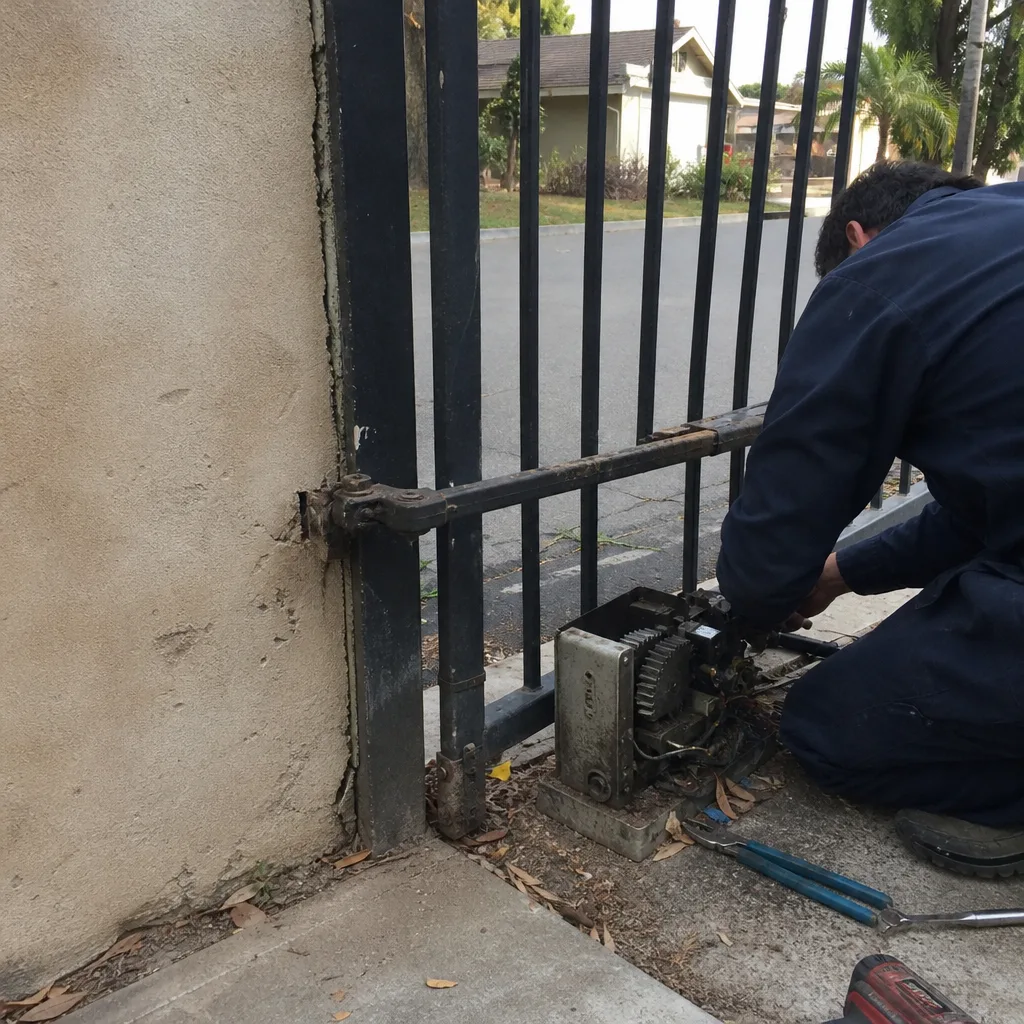 Before
 After
 Before
 After
 Before
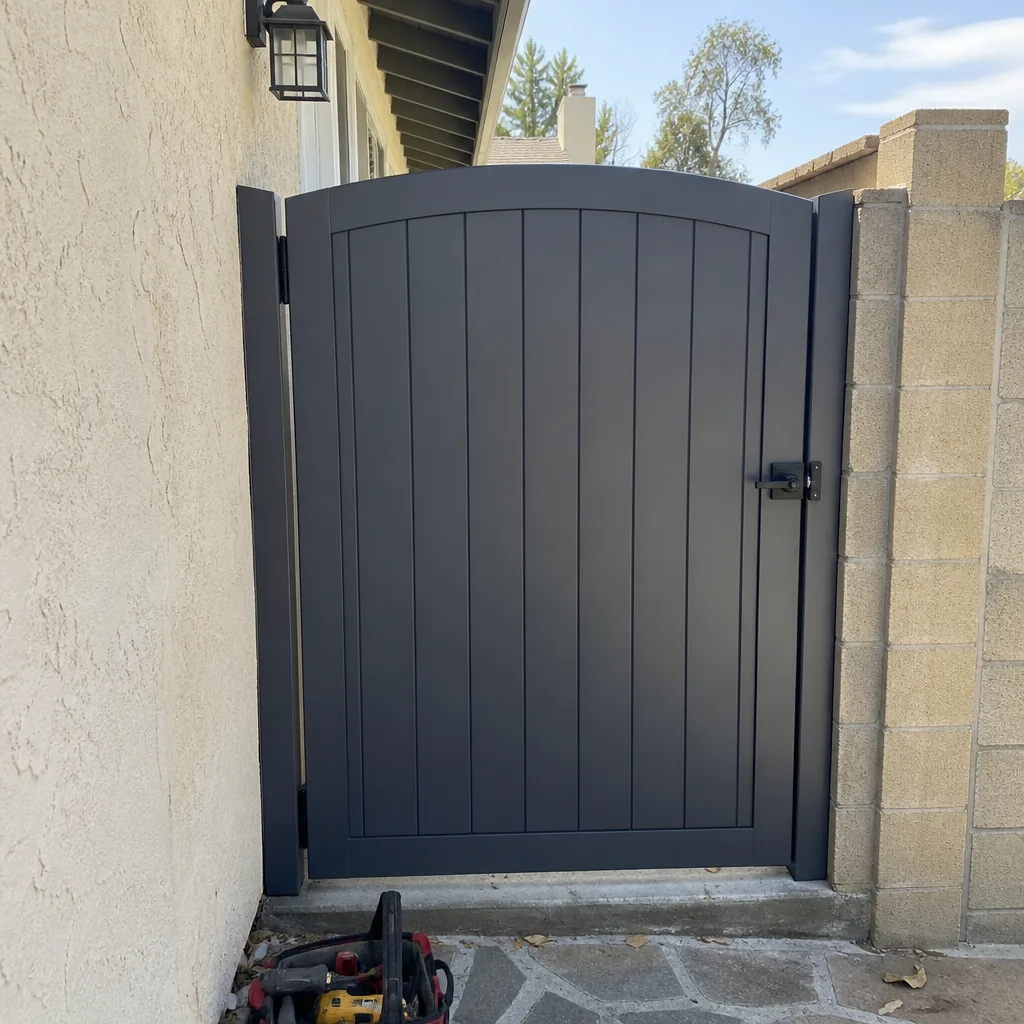 After